Forced Labor Import Compliance and How It Changes Supplier Risk
Forced labor compliance has stopped being a corporate-responsibility exercise and become a border risk with a price attached. U.S. law prohibits importing goods made wholly or in part with forced labor, and enforcement now runs on a presumption of guilt for certain supply chains: CBP can detain a shipment on suspicion alone, and it is the importer who has to produce the tracing evidence to release it. As of 2026 the exposure goes further, because a country's own enforcement record can now change the tariff rate its exports face. That makes labor due diligence a sourcing decision, not a policy document.
This guide is for importers and sourcing teams who need to know what triggers a detention, which documents actually release one, how to screen suppliers below tier one, and how the new tariff track ties a country's labor enforcement to your landed cost. It is written for people placing purchase orders, not for legal departments drafting policies.
The three mechanisms that create your exposure
Most confusion here comes from treating one legal regime as if it were three, or the reverse. They work differently and they need different responses.
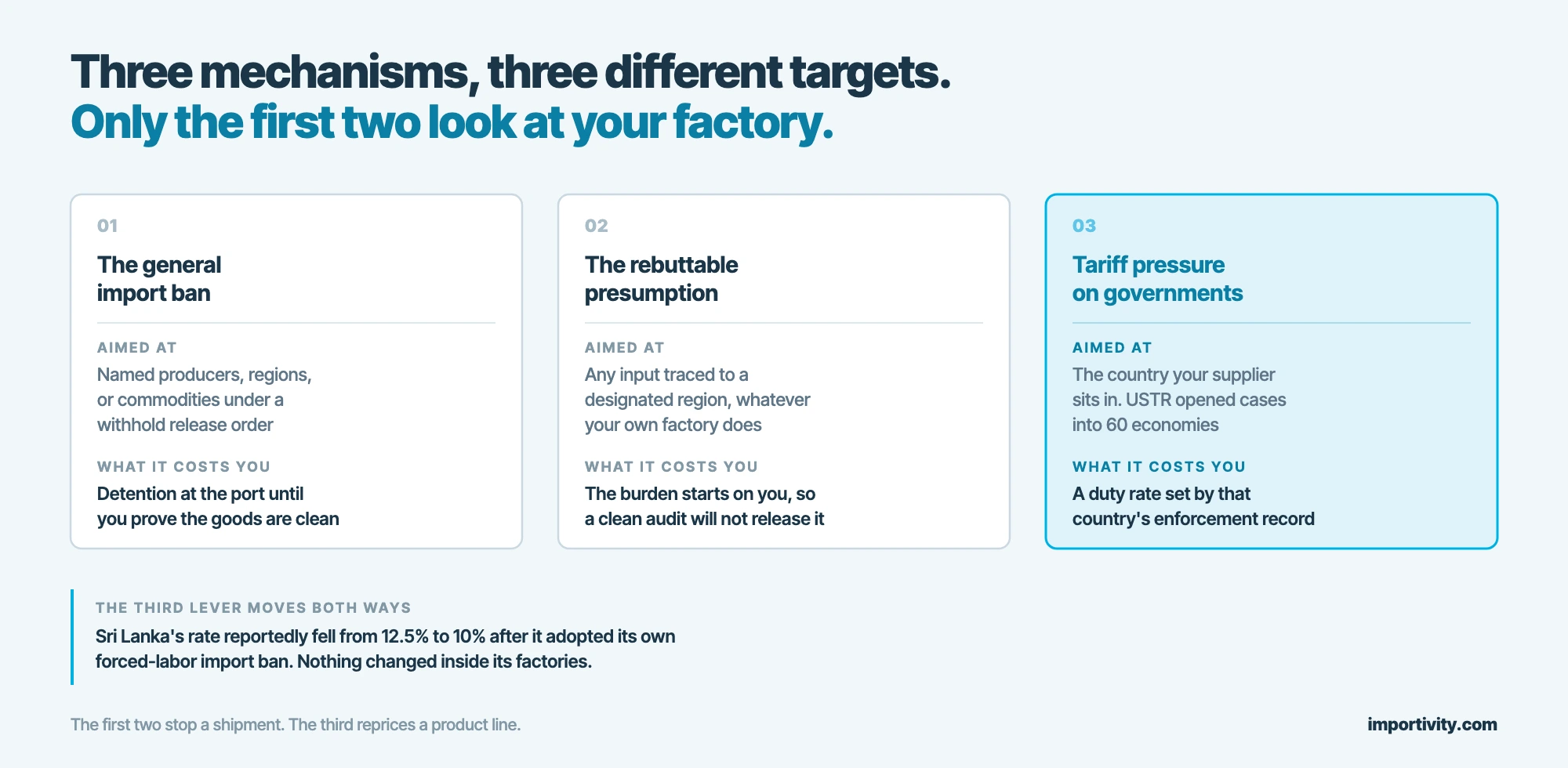
| Mechanism | How it works | What it costs you |
|---|---|---|
| The general import ban | Goods made with forced or convict labor are prohibited entry. CBP issues withhold release orders against named producers, regions, or commodities | Detention at the port until you prove the goods are clean, then exclusion or seizure if you cannot |
| Rebuttable presumption regimes | Goods with an input traced to a designated region are presumed made with forced labor unless the importer rebuts it with clear and convincing evidence | The burden starts on you, so a clean audit report alone will not release the shipment |
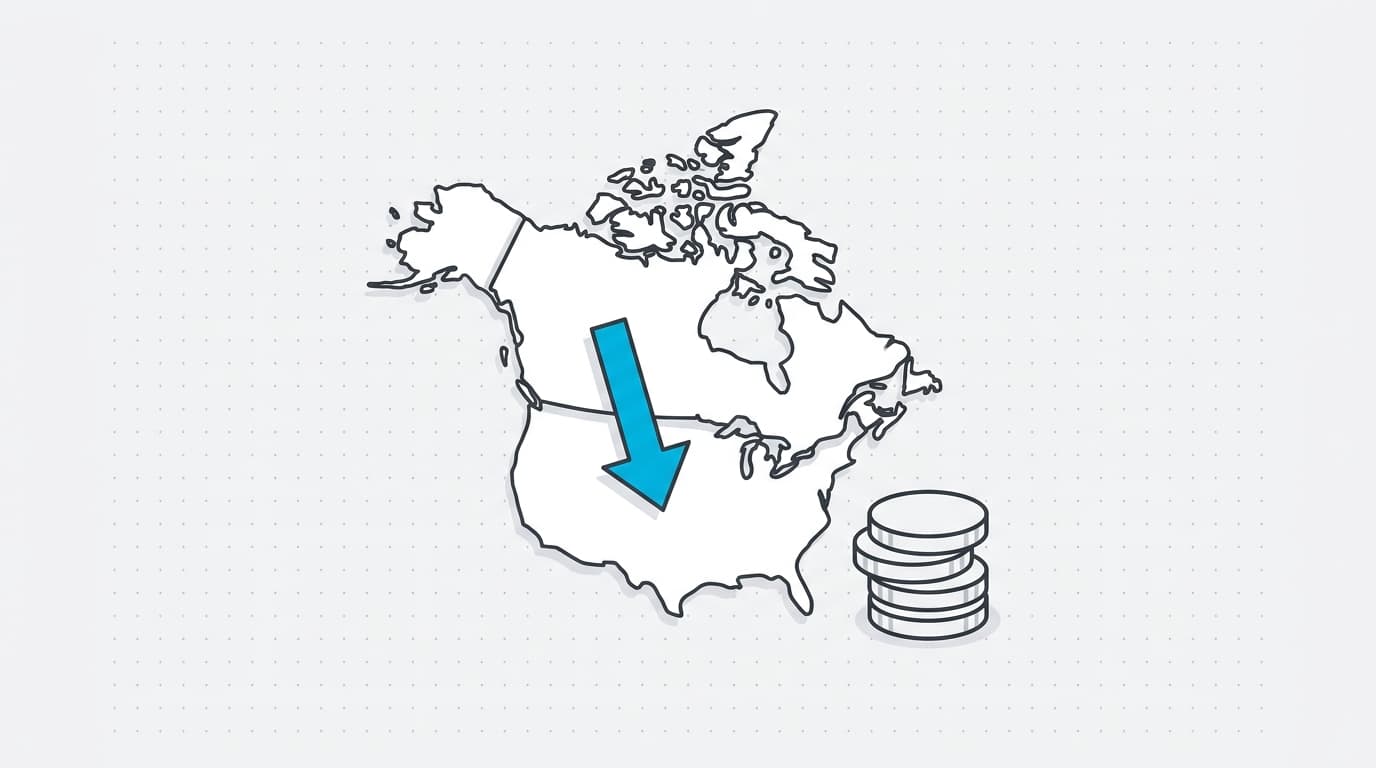
| Tariff pressure on governments | USTR opened Section 301 investigations into 60 economies over their failure to impose and enforce forced-labor import bans | A duty rate that reflects a country's enforcement record, whatever your own factory does |
The third mechanism is the newest and the one sourcing teams keep missing. It does not judge your supplier. It judges the country your supplier sits in, and it can move the rate on your entire product line. Sri Lanka's reported reduction from 12.5% to 10% after adopting an import ban on forced-labor goods shows the lever working in the other direction, which tells you that these rates are meant to be responsive rather than fixed. The background is in our summary of the 60-economy forced-labor investigations, and how Section 301 itself works is covered in Section 301 tariffs explained.
Why a detention is worse than a duty
A tariff is a number you can put in a spreadsheet. A detention is an unpriced event. Your container sits at the port while you assemble evidence, and you are paying demurrage and storage the whole time. The goods may miss the season entirely, and if the evidence does not satisfy CBP the shipment can be excluded or seized rather than returned. Once your importer-of-record number is associated with a detained supply chain, later shipments get more attention, not less.
That asymmetry should drive the decision. Spending a few thousand dollars mapping a supply chain and collecting records in advance is cheap against one detained container of seasonal goods, and the mapping is reusable for every order that follows.
The commodities and inputs that draw scrutiny
Risk clusters in inputs rather than in finished products, which is why an assembler in a low-risk country is not automatically low risk. The recurring flashpoints are cotton and textiles, polysilicon in solar components, aluminum, seafood, gloves and PPE, tomatoes and other agricultural products, and increasingly the raw and refined minerals inside electronics and batteries.
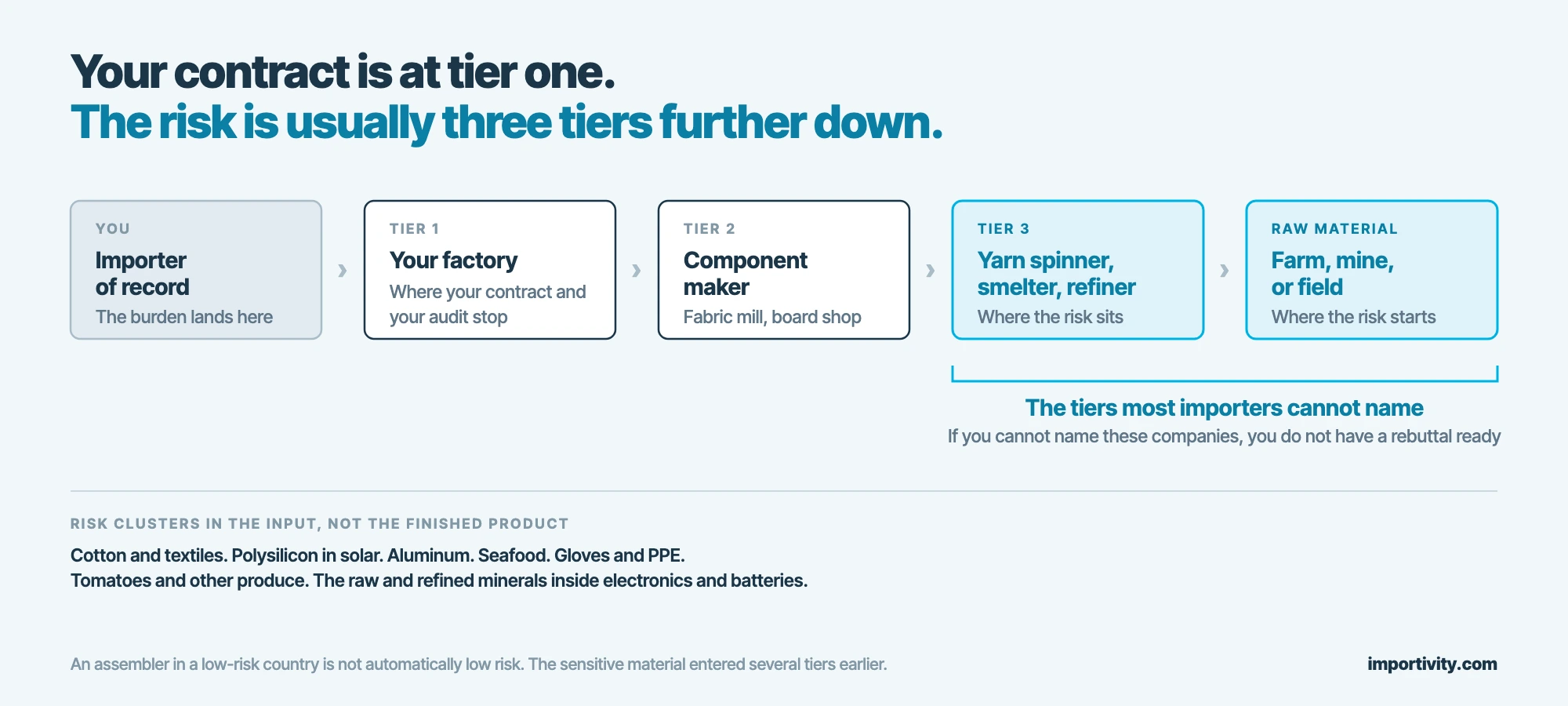
The pattern to internalize is that the sensitive material usually enters several tiers below your supplier. Your contract is with the assembler; the risk is with the yarn spinner, the smelter, or the refiner. If you cannot name those companies, you do not have a rebuttal ready, and the same blind spot causes tariff exposure through origin rules, which we cover in how to verify component origin.
What actually releases a detained shipment
Auditors' certificates and supplier declarations are useful support, but on their own they rarely satisfy a rebuttable presumption. What CBP looks for is a traceable, document-backed chain from raw material to finished good:
- A supply chain map naming every entity in the flow, including the yarn, smelter, refiner, or farm level, not just your tier-one factory.
- Transaction records at each tier, meaning purchase orders, invoices, packing lists, bills of lading, and payment proof that link one tier's output to the next tier's input.
- Production records that reconcile quantities, so the volume of input purchased plausibly produces the volume of goods shipped. Quantity reconciliation is where weak chains fall apart.
- Labor documentation at the risk tier, including payroll and time records, recruitment and agency contracts, evidence that workers hold their own identity documents, and confirmation that no recruitment fees were charged to workers.
- Isolation evidence showing that material from a designated region is genuinely not present, rather than merely undeclared.
Put this file together per product line before you need it. The importers who clear detentions quickly are the ones who were not assembling the file for the first time under demurrage.
Screening suppliers before you commit
The screening that matters happens before the first purchase order, and most of it is ordinary supplier diligence pointed at labor rather than at quality.
- Ask for the input origins in writing at the quotation stage. A factory that cannot name its material suppliers is telling you it cannot support a rebuttal either.
- Check the audit type, not just the certificate. Announced social audits are weak evidence. Semi-announced or unannounced audits with worker interviews carry far more weight, and the report should name the auditor and the sample size.
- Look for the recruitment red flags that predict forced labor conditions: heavy reliance on labor brokers, migrant workers holding debt to agents, retained passports, wage deductions that are hard to explain, and dormitory rules that restrict movement.
- Visit, or send someone. A floor walk answers questions no document does. Our factory audit checklist and the factory visit checklist cover what to look at and what to ask.
- Write it into the purchase order. Traceability obligations, subcontracting disclosure, audit access, and a remedy if the supplier cannot produce records are worth more than a signed code of conduct.
Where you would rather not run this yourself, it is a core part of how we handle supplier vetting, including the tiers below the factory you are quoting.
How this should change your country strategy
Two shifts follow from the 2026 picture. First, country selection now has a compliance dimension that sits alongside cost and lead time: a country with credible enforcement and clean input chains is worth a slightly higher unit price, because it lowers both detention risk and the chance of a labor-driven tariff move. Second, diversification stops being a tariff exit. Moving assembly to a country under the same investigation track, while continuing to buy the same sensitive inputs, changes your address without changing your exposure.
The practical response is to treat labor traceability as part of qualifying a new sourcing base. When we look at Vietnam, for example, the input dependence question sits right next to the origin question, which is why they are handled together in Vietnam origin and transshipment risk. The same reasoning applies wherever you are moving, and it is the difference between a real China plus one strategy and a repackaging exercise.
If you want to see what this looks like on a live project rather than in a guide, Source With Jordan is where we publish the sourcing itself.
Frequently Asked Questions
What is forced labor import compliance?
It is the set of checks that let you show imported goods were not made, wholly or in part, with forced labor. U.S. law prohibits entry of such goods, so compliance means being able to trace your product back through every tier to its raw materials with transaction and labor records to match.
Can CBP detain my shipment without proof of forced labor?
Yes. Under a withhold release order or a rebuttable presumption regime, CBP can detain goods on suspicion or on a traced link to a designated region. The burden then sits with the importer to produce evidence, which is why the tracing file needs to exist before a shipment is stopped.
Is a social audit or certificate enough to clear a detention?
Usually not on its own. Audits support a case but do not trace material. What clears a detention is a documented chain from raw input to finished good, with transaction records at each tier and quantities that reconcile, plus labor records at the tier where the risk sits.
How does forced labor affect the tariff rate I pay?
Through country policy rather than your own factory. USTR opened Section 301 investigations into 60 economies over their failure to enforce forced-labor import bans, so a country's enforcement record can raise or lower the duty its exports face. Sri Lanka's reported move from 12.5% to 10% after adopting a ban is an example of the mechanism working in reverse.
Does moving production to another country solve the problem?
Only if the inputs move too. Risk usually sits several tiers below your supplier, in yarn, metal, or refined minerals, so a new assembly country that keeps buying the same sensitive material carries the same detention risk. Map the input chain before you treat a move as a fix.
About the author
Jordan Lewis
Chief Operating Officer, Importivity
Runs Importivity's sourcing operations across China, Vietnam, Mexico and India, from supplier negotiation through landed delivery.
Press and media inquiries: press@importivity.com