
 Manufacturing in Vietnam
Vietnam Product Sourcing Experts
Source products in Vietnam with trusted suppliers, local insight, and a process built for reliability, cost control, and scale.
Request a quote
Get a landed-cost quote from vetted factories.
- A person replies within one business day
- Every factory signs an NDA and NNN before it sees your specs
For brands and product companies sourcing a physical product at volume. Not for dropshipping, single units or buying retail stock.
Why Vietnam Is a Global Sourcing Powerhouse
Vietnam has emerged as one of the most competitive destinations for U.S. companies seeking reliable, cost-effective manufacturing. With lower labor costs, favorable trade agreements, and a rapidly growing industrial base, it offers an attractive alternative to China while maintaining high production standards.
Importivity helps businesses capture those advantages with a hands-on sourcing team based in Ho Chi Minh City, managing factory sourcing, quality control, compliance, and logistics on the ground.
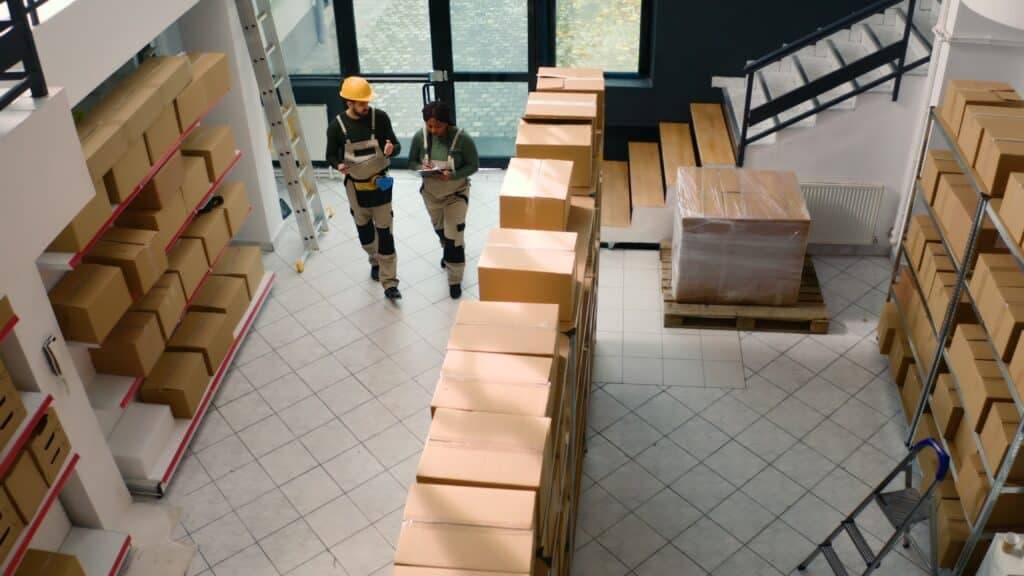
How to Source Products From Vietnam in 6 Steps
Sourcing from Vietnam follows the same sequence whether you run it yourself or hand it to us. Each step below has a decision point that decides whether the next one is cheap or expensive. Our complete guide to sourcing from Vietnam covers the background in more depth.
Find Vietnamese suppliers (platforms vs on-the-ground vetting)
Start with Alibaba, Global Sources, or a Vietnamese trade directory to build a longlist, then treat everything on it as unverified. Platform listings tell you a company exists and what it claims to make. They do not tell you whether the factory owns the machines, holds the certifications, or is a trading company reselling someone else's line. The reliable filter is someone physically visiting. Our step-by-step guide on how to find overseas manufacturers sets out the search process in full.
Verify legitimacy, capacity and compliance
Confirm the business registration and export license, then check the things that actually break programs: machine count and type, real monthly capacity versus quoted capacity, workforce size, and the certifications your buyer or category requires. Ask which of their lines your product would run on and what else runs on it. Work through a structured factory audit checklist rather than a phone call, and insist on photos or video of the actual floor.
Confirm MOQs, pricing and landed cost
Vietnamese MOQs are typically lower than comparable Chinese factories, which is a large part of why brands move there, but the quoted unit price is never the number that matters. Build the full picture: unit cost, tooling, freight, duty, and the inventory you carry against a 3 to 5 week ocean leg. Our guide to calculating landed cost is the arithmetic we use, and it is what turns three quotes into a real comparison.
Order samples and approve pre-production
Never move to mass production on a sales sample. Run the sample stages properly, ending in a pre-production sample made on the real line with the real materials, and approve it in writing against explicit criteria. Keep a signed golden sample so any later dispute has a physical reference. The full sequence is in our guide to the pre-production sample process.
Run quality control and factory inspections
Book inspections at defined checkpoints rather than at the end: during the first article, in-line while the run is on the floor, and pre-shipment against an AQL standard agreed in advance. Pre-shipment inspection alone is too late to fix anything, because the goods are already made and your leverage is gone once you have paid the balance.
Handle origin, transshipment risk and shipping
This is the Vietnam-specific step most buyers miss. Goods that are merely finished or repacked in Vietnam after being substantially made elsewhere do not acquire Vietnamese origin, and getting that wrong exposes you to penalties, not just duty. Document the production that happens in-country and keep the records. Our guide on how to prove Vietnam origin and avoid transshipment risk covers what CBP looks for.
Industries We Support Through Vietnam Product Sourcing
Vietnam offers a unique mix of cost savings, tariff advantages, and expanding industrial capacity that make it an ideal choice for global brands.
Plastic Injection
Vietnam's plastics sector is growing quickly, supported by foreign investment and improved resin access. It's ideal for cost-sensitive runs, consumer goods, and packaging where tariff avoidance is a priority.
Explore plastics sourcingMetal & CNC
While China leads in large-scale machining, Vietnam is gaining traction in basic fabrication and precision components. For companies balancing cost and quality, sourcing metals in Vietnam can provide competitive savings.
Explore metals sourcingElectronics
Vietnam is a rising force in electronics assembly, especially for consumer electronics, wiring harnesses, and mid-tier components. Lower labor costs and tariff exemptions make it a strategic choice for U.S. brands.
Explore electronics sourcingTextiles & Apparel
This is where Vietnam shines brightest. With one of the largest apparel workforces in the world, it dominates in fast fashion, basics, and private-label clothing. Competitive pricing and quality consistency make it the go-to hub for textiles.
Explore textiles sourcingWhat Vietnam Is Best for Sourcing, and Where It Falls Short
An honest read on where Vietnam beats China and where China still wins.
Where Vietnam Excels
Deep, mature supplier bases with world-class capacity. Apparel & textiles, knit and woven garments, activewear, and private label, backed by one of the largest apparel workforces on earth. Footwear, Vietnam is the world's second-largest footwear exporter, from sneakers to leather goods. Wood & furniture, a global leader in indoor and outdoor furniture for US retail. Bags & accessories, backpacks, luggage, and soft goods at scale. Consumer electronics assembly, phones, earbuds, and mid-tier components for major brands.
ExploreWhere Vietnam Falls Short
Where China's depth still makes it the better call. Raw-material depth, many fabrics, resins, and components are still imported from China, which can stretch lead times. Plastic injection & complex electronics, capable but developing; tooling and high-precision runs can be limited. Capacity strain, fast demand growth means the best factories book out and MOQs run higher. Smaller supplier ecosystem, fewer factories per niche than China, so vetting and matching matter more.
ExploreMOQs and Lead Times When Sourcing From Vietnam
Vietnamese MOQs typically run higher than China's because the supplier base is smaller and many materials are imported. Use these as planning baselines, your real numbers depend on materials, finish, and the factory.
- Apparel & garments: Typical MOQ: 500-1,000+ pcs / style / color. Production lead time: 30-60 days.
- Footwear: Typical MOQ: 800-1,200+ pairs / style. Production lead time: 40-60 days.
- Wood & furniture: Typical MOQ: container-load minimums (often 1x20ft). Production lead time: 45-75 days.
- Bags & accessories: Typical MOQ: 500-1,000 pcs. Production lead time: 30-55 days.
- Plastic injection: Typical MOQ: 3,000-10,000 pcs (plus tooling). Production lead time: 35-60 days + 3-5 wks tooling.
- Electronics assembly: Typical MOQ: 1,000-5,000 units. Production lead time: 40-70 days.
- On top of production: budget 2-4 weeks for raw-material procurement, especially when fabric or resin is sourced from China. The single biggest scheduling risk is Tet (Vietnamese Lunar New Year, late January/February), when most factories close for one to two weeks and reopen at reduced capacity. We plan POs and a pre-production sample timeline around it so you don't lose a quarter.
Vietnam Tariffs and Landed Cost for US Importers (2026)
US-Vietnam tariff policy is moving fast. Here's where it stands today; we refresh this section quarterly. Last updated: October 2026.
- Section 301 forced-labor tariff: since July 24, 2026, a 12.5% Section 301 tariff applies to all products of Vietnam unless an annex exemption applies, on top of the normal MFN/HTS rate. It is being challenged at the Court of International Trade, and CBP keeps collecting while the case runs.
- IEEPA and Section 122 have ended: the Supreme Court struck down the IEEPA "reciprocal" tariffs on February 20, 2026, and the temporary 10% Section 122 surcharge that replaced them ended on July 24, 2026. China still pays Section 301 list rates (7.5% to 25% on many goods) on top of the same 12.5% forced-labor tariff, so Vietnam usually keeps a duty edge.
- Origin has to be real: goods rerouted from China without genuine production in Vietnam keep Chinese origin and Chinese duties, which is why a clean Certificate of Origin and real factory production matter. Normal MFN / HTS duties still apply on top, varying by product code. We map all of this into a tariff-aware landed cost before you commit.
- Tariff rates change frequently: and this is general guidance, not customs or legal advice. Confirm current duties for your HTS code before importing, and see current rates on our tariff tracker.
Landed Cost Is More Than Unit Price
The five components we model before you place a PO.
- Unit price: The FOB factory price per piece.
- Duties & tariffs: The MFN/HTS rate for your product plus the 12.5% Section 301 forced-labor tariff, unless an annex exemption applies.
- Tooling & samples: One-time mold and pre-production sample costs.
- Inspections: QC, lab testing, and certification.
- Freight & insurance: Ocean or air, drayage, and customs brokerage.
How to Find and Vet Vietnamese Factories
Vietnam's supplier base is harder to navigate than China's, fewer aggregators and more trading companies posing as factories. Here's how we separate real manufacturers from middlemen.
Finding Real Factories
Alibaba's Vietnam coverage is thinner than China's. Customs and import records (tools like Import Yeti) reveal who actually ships, and trade shows such as VIFA Expo (furniture) and SaigonTex (textiles) put you in front of verified makers. Note that Zalo, not WeChat or WhatsApp, is the default business messaging app.
Manufacturer vs. Trading Company
Trading companies add margin and obscure accountability. We confirm the business license, the real factory address, and ask for a live video walk of the floor, so you're buying from the people who actually make your product, not a reseller.
Verify Before You Commit
Every supplier passes a business-license check, an on-site factory audit, and a signed-off pre-production sample before a single bulk PO. It's the cheapest insurance you'll buy in the whole process.
Red Flags to Walk Away From
Prices far below market, refusal to share the business license or allow a visit, no responsiveness on Zalo or in English, and vague or unverifiable certifications. Any one of these is reason enough to keep looking.
The Common Concerns About Vietnam Sourcing
Shifting production into Vietnam comes with legitimate concerns. Here's exactly how we neutralize each one.
Key Challenges
The risks brands worry about when they move from China to Vietnam. Lead times: production can run 1-2 weeks slower than in China. Capabilities: not all factories can handle complex geometries or tight tolerances. Quality assurance: concerns about consistency and a lack of on-site QC.
Our Solutions
How our Ho Chi Minh City team turns each concern into a controlled process. Reliable output: slightly longer lead times, but stable and predictable schedules. Advanced capabilities: access to audited factories specializing in plastics, CNC, and tight-tolerance work. Proven quality control: local QC teams, audited suppliers, and a clear VN vs CN cost model.
Core Capabilities Across Vietnam
Importivity removes the guesswork with a disciplined approach to Vietnam manufacturing sourcing, predictable costs, timelines, and quality.
Precision Plastics
Injection molding, extrusion, and overmolding with export-ready QC for consumer and industrial parts.
Advanced CNC Machining
5-axis machining, GD&T tolerances, surface finishing, and PPAP inspections.
Export Readiness
Full documentation, U.S./EU compliance, and DDP logistics expertise.
Stable Production
Slightly longer lead times than China, but predictable, consistent quality output.
Importivity's Vietnam Product Sourcing Services
End-to-end sourcing for U.S. companies that want to leverage Vietnam's advantages without taking on unnecessary risk.
Factory Sourcing & Vetting
We identify and audit factories with proven performance and compliance.
Supplier Negotiations
Our bilingual experts secure the best pricing and favorable terms.
Quality Assurance & Inspections
On-site inspections protect you from costly mistakes.
Tariff Strategy & Compliance
Navigate CPTPP, EVFTA, and U.S. trade rules with confidence.
Logistics & Freight
Streamlined, tariff-aware freight solutions that ensure timely delivery.
Payment Terms and Quality Control Standards
Two places deals go wrong: paying too much too early, and skipping inspection. We standardize both so your money and your leverage stay protected.
Payment Terms That Protect You
Standard, balanced terms, never 100% upfront to a new supplier. 30/70 deposit structure, 30% to start production, 70% only after a passing pre-shipment inspection. T/T (bank wire) is the norm; structure terms so your leverage survives until goods are verified. Release the balance after inspection, once it's paid, your influence over fixes disappears. Tooling paid separately with clear, written ownership terms.
Quality Control Standards
Multi-stage QC run by our Ho Chi Minh City team. Pre-production sample signed off before any bulk run begins. AQL inspections (typically AQL 2.5) during and after production. Inline & pre-shipment checks performed on-site, not by remote photos. Lab testing & compliance to US/EU standards where the product requires it.
Case Studies from Vietnam
Recent examples where we helped clients source, and reverse-source, products from Vietnam.

Containers of Durian to China
How Importivity secured high-value cold-chain exports from Vietnam to Guangzhou by pairing trusted buyers with tight payment terms and transparent delivery schedules.
The Challenge
Each reefer container carried over $100,000 in durian into a fast-moving Guangzhou market where buyer quality varies and cold-chain handovers add real risk.
Our Approach
Activated long-standing relationships with vetted Chinese distributors and structured each deal with deposits, release-on-docs, and clear delivery windows.
The Results
Reliable placement of high-value loads, codified cold-chain SOPs that sped up customs release, and a repeatable export operation with repeat shipments.
Reverse Sourcing a National Launch
How Importivity traced a proven product's supply chain, negotiated direct factory access, and helped a client launch nationally, without costly R&D.
The Challenge
A client wanted to launch a new beverage quickly, skipping months of formulation by building on an existing, proven factory and product platform.
Our Approach
Using insider market mapping, we traced the supply chain to the source factory, confirmed capability and certifications (HACCP / SQF / BRC), and secured factory-direct terms.
The Results
The product launched faster and cheaper than a traditional R&D path, and has since sold over one million cans across the United States.
Why Work With Importivity in Vietnam?
Most sourcing problems don't start at the factory, they start with not having the right people on the ground. That's what we fix first.
Local Team in Ho Chi Minh City
On-site sourcing, QA, and compliance handled by people who speak the language, know the factories, and can walk the floor without warning. No remote guesswork.
Decades of Asia Sourcing Experience
We've seen every pitfall, capacity bait-and-switch, material swaps, tolerance misses, last-minute subcontracting, and built playbooks to prevent them before they cost you a shipment.
Proven With Growing Brands
From founder-led brands placing their first production order in Vietnam to companies managing multi-factory supply chains, we help teams launch and scale without quality issues or compliance surprises.
How These Resources Fit Into Your Strategy
Each resource works on its own, but they're most powerful applied together as one streamlined sourcing process. Start with specs, collect quotes, vet on-site, onboard cleanly, and keep the guide at hand throughout.
BOM Template
Organize your product specs before you ask for quotes.
ExploreRFQ Template
Collect accurate, apples-to-apples supplier quotes.
ExploreFactory Visit Checklist
Vet suppliers on-site with a structured walkthrough.
ExploreSupplier Onboarding Checklist
Bring a new partner online cleanly once you've chosen.
ExploreProduct Sourcing Guide
Keep the full playbook at hand as your reference manual.
ExploreMore on sourcing from Vietnam


Frequently Asked Questions
Sourcing Company Case Studies
Real founders, real results. Hear their stories in their own words.
Book Your Vietnam Product Sourcing Call
Book a free 30-minute call. We'll map a tariff-aware landed cost and match you with vetted factories in Vietnam that fit your specs and budget.