How to Calculate Landed Cost (A Step-by-Step Formula for Importers)
Landed cost is your full cost to get a product from the factory to your warehouse, ready to sell. To calculate it, add the product cost, international freight, insurance, import duties and tariffs, U.S. customs fees (MPF and HMF), customs broker and bond fees, port charges and delivery to your door, then divide the total by the number of units.
It is the most important number in international sourcing, and the one most importers get wrong. The factory price your supplier quotes is only the starting point. By the time your goods reach your warehouse, you have added freight, duties, insurance, broker fees, drayage (the short truck move out of the port), wire transfer fees, and often a few costs you did not budget for at all. That total, the landed cost, is what decides your actual margin.
If you price a product from the EXW (ex-works: the price at the factory door, before any shipping) or FOB (free on board: the price once the goods are loaded on the ship at the export port) unit price, your margin figures will be wrong. In the worked example below, a mug that looks like a 69% gross margin at the factory price earns 39% once every real cost is counted. This guide walks through the full formula, a line-by-line example with the duty rates and customs fees in force in November 2026, and the costs that first-time and experienced importers both miss.
Before you read further: if you want to run the numbers directly, use our free landed cost calculator to model any shipment in a few minutes.
The Full Landed Cost Formula
Landed cost is not a single line item, it's the sum of every cost incurred from the moment a product is manufactured to the moment it's available for sale in your facility. The standard formula:
Landed Cost = Product Cost + International Freight + Import Duties & Tariffs + U.S. Customs Fees (MPF and HMF) + Insurance + Customs Broker and Bond Fees + Port & Handling Charges + Domestic Freight (Last-Mile) + Payment & FX Fees + Overhead Allocation
Landed cost per unit = Landed Cost divided by the number of units in the shipment.
Each element deserves its own line in your cost model. A rough multiplier (for example, "add 20% for shipping and duties") hides the lines that move the most: the duty rate for your exact product and country, the current freight rate, and the fixed per-shipment fees that weigh heavily on small orders.
Breaking Down Each Component
- Product cost: The ex-works price per unit, including any tooling amortization, sample costs spread across the first run, and any supplier minimum-order premiums.
- International freight: Ocean FCL (a full container), LCL (shared container space), or air freight from origin port to destination port. This varies a lot by route, season, and cargo type, so budget from current quotes, not last year's rates. For scale, Drewry's World Container Index put a 40-foot container from Shanghai, China to Los Angeles at $7,026 on 19 November 2026.
- Import duties & tariffs: Calculated as a percentage of the customs value. In the U.S. that is generally the price paid for the goods, without international freight and insurance (many other countries use CIF, the goods plus freight and insurance). The rate depends on the HTS code and the country of origin. For Chinese goods it is a stack of layers: the ordinary duty, plus the regular Section 301 China tariff if the product is on one of its lists (25% for most goods on Lists 1 to 3, 7.5% on List 4A, and more for a few products), plus the 12.5% Section 301 forced-labor duty that has applied to products of China since July 24, 2026 (HTSUS 9903.05.31). Some goods are exempt from it, such as steel, aluminum and copper articles, vehicles and their parts, and wood products (HTSUS 9903.05.90).
- U.S. customs user fees: The merchandise processing fee (MPF) is 0.3464% of the customs value on a formal entry, with a minimum of $34.58 and a maximum of $670.86 per entry since October 1, 2026. A shipment worth $2,500 or less can use an informal entry, which pays a flat $2.77 MPF when filed electronically, unless it holds more than $250 of goods that carry a Chapter 99 duty such as Section 301 (19 CFR 143.21(a)). Almost every product of China now carries one, so most China orders over $250 need a formal entry. The harbor maintenance fee (HMF) is 0.125% of the value of goods that arrive by ship (19 CFR 24.24). Air shipments do not pay it.
- Insurance: All-risk ocean cargo cover is commonly quoted at about 0.5% to 1% of the insured value, and the insured value is usually the CIF value plus 10%. Our cargo insurance cost guide explains why the carrier's own liability (as little as $500 per package by sea) rarely covers a loss. Often optional but rarely wise to skip.
- Customs broker fees: Entry filing, ISF (Importer Security Filing, the cargo data that must reach CBP before an ocean shipment is loaded), a customs bond, and any examination fees. Based on the 2026 broker fee schedules in our customs broker cost guide, expect about $125 to $175 for a formal ocean entry, $50 to $85 for the ISF, and $45 to $120 for a single-entry bond if you do not hold a continuous bond. Expect more if the shipment is flagged for examination.
- Port & handling charges: Drayage from the port to a nearby CFS or your freight forwarder's facility, port demurrage if containers aren't picked up promptly, and terminal handling charges (THC).
- Domestic last-mile freight: Trucking or LTL from the port/deconsolidation point to your warehouse. Often underestimated, especially for bulky goods.
- Payment & FX fees: Wire transfer fees, letter of credit costs, and any currency conversion spread if your supplier invoices in RMB, EUR, or another currency.
- Overhead allocation: Your team's time sourcing, inspecting, and managing the shipment. Even if you don't charge this explicitly, it's a real cost. Ignoring it inflates apparent margin.
A Worked Example: 500 Units of a Ceramic Mug
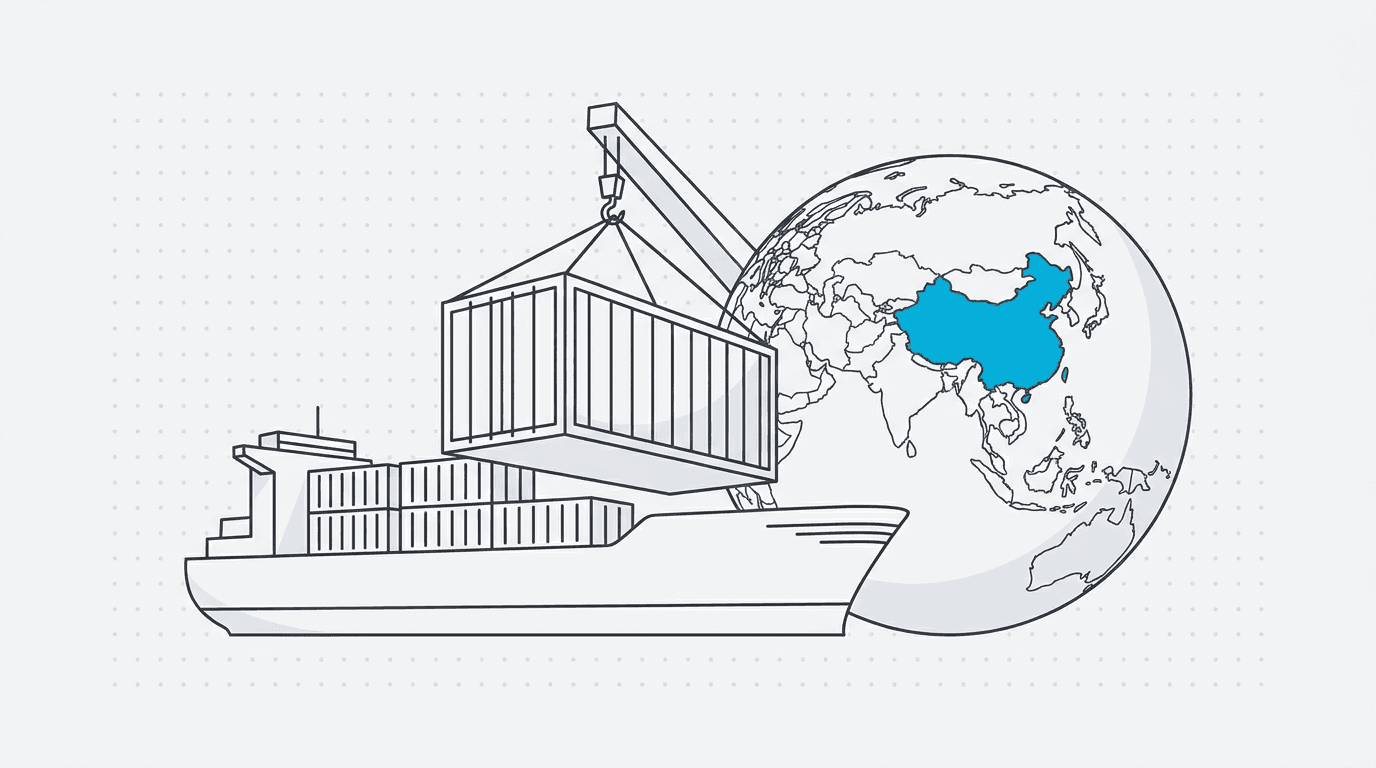
To make this concrete, here's a full landed cost breakdown for a sample shipment: 500 stoneware mugs (ceramic, not porcelain) bought EXW from a factory in Jingdezhen, Jiangxi, China, and shipped LCL from Shanghai, China to a warehouse in Los Angeles. The duty rates and customs fees are the ones in force on 24 November 2026. The freight, broker, bond and trucking figures are example quotes, so replace them with your own.
What goes in:
- Factory price: $5.60 per mug EXW, so $2,800 of goods. That is over $2,500, so the shipment needs a formal customs entry and a customs bond.
- Size: 2 CBM (cubic meters) of cartons. LCL is charged per CBM or per 1,000 kg, whichever is greater, and these cartons are light, so the 2 CBM sets the price.
- HTS code: 6912.00.44.00, "mugs and other steins" of ceramic other than porcelain.
- Payment: a 30% deposit and the 70% balance before shipping, so two bank wires.
| Cost Component | Calculation Basis | Total Cost (USD) | Per Unit |
|---|---|---|---|
| Product cost (ex-works) | 500 units × $5.60 | $2,800.00 | $5.60 |
| Pickup in Jingdezhen and truck to Shanghai port | Example quote | $300.00 | $0.60 |
| Origin charges (export customs declaration, origin warehouse, documents) | Flat | $150.00 | $0.30 |
| International ocean freight (LCL), Shanghai to Los Angeles | 2 CBM × $320/CBM | $640.00 | $1.28 |
| Cargo insurance | 0.5% × insured value of $4,279 (CIF value of $3,890 plus 10%) | $21.40 | $0.04 |
| Import duty (HTS 6912.00.44.00) | 10% ordinary + 0% Section 301 China + 12.5% Section 301 forced-labor = 22.5% × $2,800 customs value | $630.00 | $1.26 |
| Merchandise processing fee (MPF) | 0.3464% × $2,800 = $9.70, below the minimum, so the $34.58 minimum applies | $34.58 | $0.07 |
| Harbor maintenance fee (HMF) | 0.125% × $2,800 | $3.50 | $0.01 |
| Customs broker entry + ISF | $150 entry + $65 ISF | $215.00 | $0.43 |
| Single-entry customs bond | Example quote | $60.00 | $0.12 |
| Port drayage + CFS handling | Flat (LCL deconsolidation) | $210.00 | $0.42 |
| Domestic trucking to warehouse | Flat (local LA area) | $175.00 | $0.35 |
| Wire transfer fees | 2 wires × $30 | $60.00 | $0.12 |
| Overhead allocation (est.) | 3 hrs sourcing & logistics × $50/hr | $150.00 | $0.30 |
| Total Landed Cost | Sum of all lines; per unit = $5,449.48 divided by 500 | $5,449.48 | $10.90 |
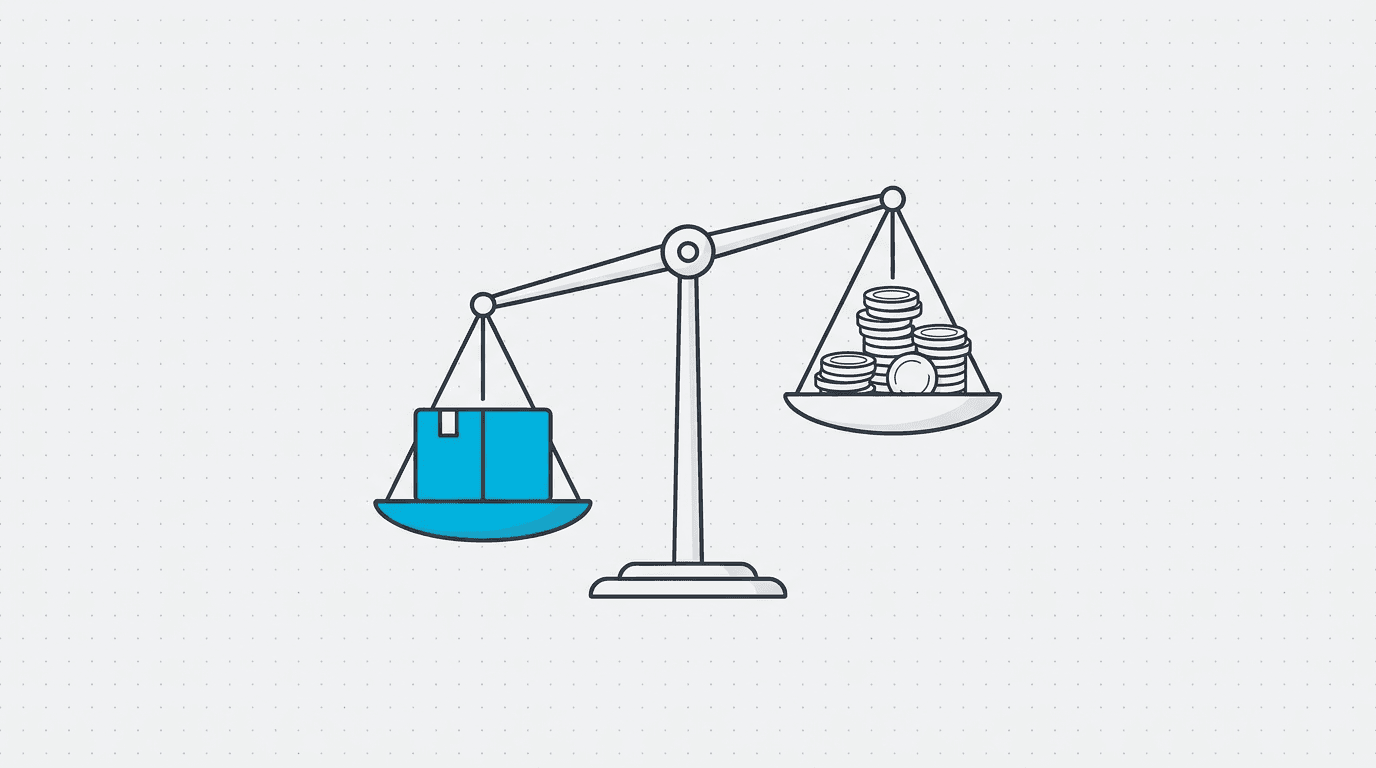
The ex-works unit price was $5.60. The landed unit cost is $10.90, almost double. If you sell these mugs at $18.00 retail and price them from the $5.60 factory cost, your modeled gross margin is 69%. Your actual margin based on landed cost is 39%. That is 30 margin points you didn't have.
How the duty line is built
The 22.5% comes from three layers, each charged on the same $2,800 customs value:
- 10% ordinary duty for HTS 6912.00.44.00, from the USITC Harmonized Tariff Schedule.
- 0% regular Section 301 China tariff. Ceramic mugs were put on List 4B in 2019, and List 4B was suspended before it took effect (its heading, HTSUS 9903.88.16, is marked "provision suspended"). Check your own code: many Chinese goods are on Lists 1 to 3 (25%) or List 4A (7.5%).
- 12.5% Section 301 forced-labor duty on products of China, in force since July 24, 2026 (HTSUS 9903.05.31).
The customs value is what you paid the factory. The China pickup, ocean freight and insurance you pay your forwarder are not added to it. Change the product or the country and the duty line changes, while most other lines stay the same:
| Same $2,800 order | Duty layers | Duty |
|---|---|---|
| Stoneware mugs from China (this example) | 10% + 0% + 12.5% = 22.5% | $630 |
| A plastic part from China on Section 301 List 3, 3% ordinary duty | 3% + 25% + 12.5% = 40.5% | $1,134 |
| The same mugs from Vietnam | 10% + 12.5% forced-labor = 22.5% | $630 |
| The same mugs from India | 10% + 10% forced-labor = 20% | $560 |
For these mugs, moving production from China to Vietnam saves nothing on duty, because the mugs never carried the regular China Section 301 tariff. For the List 3 plastic part, the same move cuts the duty from 40.5% to 15.5%. That is why you check the exact HTS code before you move a factory to save on tariffs.
How the MPF and HMF are worked out
MPF is 0.3464% of the customs value, but a formal entry pays at least $34.58 and at most $670.86 (fiscal year 2027 amounts, per CBP's Federal Register notice of July 31, 2026). 0.3464% of $2,800 is $9.70, so this order pays the $34.58 minimum. Any formal entry with less than about $9,980 of goods pays the minimum, and the maximum starts at about $193,700. HMF is 0.125% of the value and applies only to goods that arrive by ship, so an air shipment does not pay it. In total, this order pays $668.08 to U.S. Customs through the broker: $630.00 duty, $34.58 MPF and $3.50 HMF.
Several lines are fixed per shipment, whatever the order size: broker and ISF, bond, the MPF minimum and the bank wires come to $369.58 here. That adds $0.74 to each of 500 mugs, but about $0.37 to each mug on a 1,000-mug order. To run the same calculation with your own numbers, enter your factory price, price terms (EXW, FOB, CIF or DDP), quantity and freight quote in our landed cost calculator. It looks up the duty for your product and country, including the 2026 forced-labor duty.
Key takeaway: Per-unit landed cost is the only cost figure that tells you whether a product is worth importing. The factory price is a starting point for negotiation, not a basis for pricing decisions.
How Your Incoterm Changes What You Pay
Which costs fall on you versus your supplier depends heavily on the shipping terms you negotiate. FOB vs DDP represents opposite ends of the spectrum: under FOB (Free on Board), you take responsibility from the moment goods are loaded onto the vessel; under DDP (Delivered Duty Paid), your supplier handles everything including duties. Between those two are a dozen other terms defined in Incoterms 2020 that split costs in different ways.
You will see all three kinds of quote. In the factory quotes our sourcing team collected in 2026, mostly from factories in China with some in Taiwan and Vietnam, about 4 in 10 were EXW, about 2 in 10 were DDP, and most of the rest were FOB a Chinese port such as Ningbo, Shanghai or Qingdao. Two quotes for the same product can't be compared until both are turned into a landed cost. Use the lines from the mug example above:
| Quote term | What the factory price already covers | What you still add to reach landed cost |
|---|---|---|
| EXW (ex-works) | The goods, packed, at the factory door | Everything: China pickup and export fees, ocean or air freight, insurance, duty, MPF, HMF, broker, ISF, bond, U.S. port fees and delivery |
| FOB (free on board) | The goods plus China trucking, export clearance and loading at the port | Ocean freight, insurance, duty, MPF, HMF, broker, ISF, bond, U.S. port fees and delivery |
| DDP (delivered duty paid) | The goods delivered to your address with duty and fees paid | Usually nothing for freight and duty, but confirm the delivery address, that the price uses the November 2026 duty rates, and who is the importer of record |
DDP sounds appealing because your supplier handles logistics and customs, but you lose visibility into the actual freight and duty costs, and suppliers often mark them up. Ask who will be the importer of record (the party legally responsible to CBP for the entry). If the entry is filed in your company's name, you answer for any duty CBP later finds was underpaid. For most mid-size importers, FOB or CIF gives better cost control and more accurate landed cost modeling.
Hidden Costs That Routinely Get Missed
The components above are the ones most importers eventually figure out. These are the ones that often get missed:
Demurrage and Detention
If your container sits at the port past the free-time allowance (typically 3 to 5 days), demurrage fees accumulate fast, often $150 to $300 per container per day. Customs examinations, documentation issues, or simply slow trucking arrangements can trigger these charges on an otherwise well-planned shipment.
Antidumping and Countervailing Duties (ADD/CVD)
These are separate from standard HTS duties and Section 301 tariffs, and they can be enormous, sometimes 100%+ of the customs value. They apply to specific product categories from specific countries where dumping or government subsidies have been found. If your HTS code is in a category with active ADD/CVD orders and you don't know it, you may receive a bill from CBP months after clearance.
First Article and Pre-Shipment Inspection Costs
Third-party inspection before shipment typically runs $200 to $400 per factory visit. It's not required, but it costs far less than a bad shipment: return freight, replacement production and lost sales. This cost should live in your landed cost model, not be written off as a one-time surprise.
Product Compliance and Certification
If your product requires testing, CPSC, FDA, FCC, CE, or otherwise, those lab costs and the time to obtain certificates are part of your true cost per unit, especially on the first production run. Spread over a 500-unit order, a $2,000 compliance test adds $4.00 per unit.
Currency Fluctuation
If your supplier invoices in USD but their costs are in RMB, a weakening dollar can push them to request price increases mid-contract. If you're paying in a foreign currency, you're carrying FX risk directly. Neither situation appears in a static cost model.
Tariff exposure is one of the most variable and controllable parts of landed cost. If you're importing from China, it's worth examining your HTS classification carefully, misclassification is common and can mean either overpaying or unwanted compliance risk. Beyond classification, there are structural options worth modeling: bonded warehouses, first-sale valuation, and country-of-origin changes via third-country manufacturing. See our guide to tariff mitigation strategies for a full breakdown of what's available and what each costs to implement.
How to Lower Your Landed Cost
Once you have an accurate cost model, the levers for reducing it become clear:
Consolidate Shipments
LCL freight carries a significant per-CBM premium over FCL. If you're shipping LCL across multiple SKUs or multiple suppliers, consolidating into a full container, even if it means adjusting order timing, often reduces freight cost by 30 to 50% per unit. Your freight forwarder can run the numbers.
Negotiate Origin Charges
Many importers focus exclusively on the FOB price and accept the freight forwarder's charges at face value. Origin charges (THC, documentation fees, seals) are often negotiable, especially if you're giving the forwarder steady volume.
Review Your HTS Classification
Duty rates vary significantly within product categories. A product classified under one 10-digit HTS code might carry a 6% duty; a closely related code might carry 3.4%. The mug in the example above shows how fine the line is: a stoneware mug (6912.00.44.00) pays 10% ordinary duty, while a porcelain mug (6911.10.45.00) pays 14%. If your classification was determined by your broker without a formal ruling, it's worth a second opinion, particularly on high-volume products.
Use a Bonded Warehouse or FTZ
If your product goes to multiple end markets or is re-exported in part, a Foreign Trade Zone or bonded warehouse lets you defer or avoid duties on goods that don't ultimately enter U.S. commerce. The setup cost is real but the duty savings on large volumes can justify it quickly.
Evaluate DDP vs. FOB Carefully
On some trade lanes and with certain suppliers, asking for DDP pricing and then benchmarking it against your own FOB + duty + freight model will reveal whether the supplier is marking up logistics, or occasionally, whether they have better freight rates than you do. Either way, knowing the comparison is valuable.
Efficient supply chain management, coordinating procurement timing, shipment consolidation, and supplier payment terms, is often where the biggest landed cost reductions come from, not individual line-item negotiations.
The commercial terms are where most of the money actually moves on an import program, and Source With Jordan is where we publish that side of the work.
If you want our sourcing team to find and vet factories for your product and compare their quotes on landed cost, submit a free sourcing request.
Frequently Asked Questions
What is the difference between landed cost and unit cost?
Unit cost typically refers to what you pay your supplier, the ex-works or FOB price per unit. Landed cost includes every expense incurred to get that unit to your warehouse and ready for sale: freight, duties, insurance, broker fees, domestic trucking, and related overhead. Landed cost is always higher than unit cost, often by 40% to 120% depending on the product, trade lane, and duty rate.
How do I find the correct HTS code and duty rate for my product?
You can search the Harmonized Tariff Schedule at usitc.gov using product keywords. The HTS code determines your base duty rate and also flags whether additional tariffs (Section 301, antidumping, countervailing) apply. For products in ambiguous categories, you can request a binding ruling from U.S. Customs and Border Protection, this gives you certainty before you import. Your customs broker should also be able to classify your product, though getting a second opinion on high-duty items is worthwhile.
Is landed cost calculated per unit or per shipment?
Both, you need the total shipment landed cost to check your overall spend, and the per-unit landed cost to make pricing and margin decisions. To get per-unit cost, divide total landed cost by the number of units in the shipment. If you're shipping multiple SKUs in the same container, allocate shared costs (freight, broker fees, drayage) by cubic volume or weight, whichever reflects how you actually fill the container.
How often do landed costs change?
Freight rates can change significantly from quarter to quarter, ocean rates during 2021 to 2022 ran 5 to 10 times their pre-pandemic levels. Tariff rates can shift with trade policy changes, sometimes with very little notice. Product costs change with raw materials and factory capacity. You should remodel landed cost at least once per year and any time you get a new freight quote, your supplier raises prices, or there's a policy change affecting your HTS codes or origin country.
Do I include landed cost when calculating my Amazon or retail margin?
Yes, always. Platform fees, fulfillment costs, and advertising are calculated on top of landed cost, not on top of factory price. A common mistake is modeling profitability as: selling price minus factory price, then subtracting Amazon fees as a secondary check. The correct model is: selling price minus landed cost minus all channel costs equals true contribution margin. Using factory price instead of landed cost systematically overstates your margin by the full gap between the two figures.
How much are MPF and HMF on an import in 2026?
From October 1, 2026 (U.S. fiscal year 2027), the merchandise processing fee on a formal entry is 0.3464% of the customs value, with a minimum of $34.58 and a maximum of $670.86 per entry. A shipment worth $2,500 or less can use an informal entry, which pays a flat $2.77 when filed electronically, unless it holds more than $250 of goods that carry a Chapter 99 duty such as Section 301; that covers most orders from China. The harbor maintenance fee is 0.125% of the value of goods that arrive by ship. Air shipments do not pay it.
Is import duty charged on the factory price or on the landed cost?
In the U.S., duty is charged on the customs value, which is normally the price you paid the seller for the goods. International freight and insurance are not included. In the mug example on this page, duty is charged on the $2,800 paid to the factory, not on the $3,890 the goods cost once freight and China charges are added, and not on the $5,449.48 landed cost. Many other countries charge duty on the CIF value instead.
About the author
Jordan Lewis
Chief Operating Officer, Importivity
Runs Importivity's sourcing operations across China, Vietnam, Mexico and India, from supplier negotiation through delivery to the client's door.
Press and media inquiries: press@importivity.com