
How Sustainable Packaging Choices Impact Product Sourcing Costs

Sustainable packaging is no longer just an environmental buzzword; it has evolved into a strategic business choice that significantly impacts product sourcing costs. Across global supply chains, more companies are realizing that their packaging decisions directly affect transportation efficiency, product quality, regulatory compliance, and customer satisfaction. As a result, importers who once considered packaging an afterthought now treat it as a key part of cost control and sustainability.
At Importivity, we see this change often. Businesses now treat packaging as a cost they can manage, because it can raise or cut their profit. Through sustainable packaging, organizations are discovering ways to reduce hidden sourcing costs while improving their brand’s reputation and operational efficiency.
Why Sustainable Packaging Matters in Product Sourcing
In the past, packaging meant a simple box and tape. Today, however, it has become a calculated decision that influences freight charges, storage fees, and even environmental taxes. When importers plan their sourcing strategy, sustainable packaging must be viewed as an integral part of the process rather than the final step before delivery.
Eco-friendly packaging is typically lighter, more compact, and more durable. So when a company chooses sustainable materials and optimized designs, it reduces waste and lowers shipping costs. Furthermore, better packaging design leads to fewer damaged goods, fewer returns, and greater overall efficiency. Consequently, sustainable packaging becomes both an environmental and a financial win.
The Hidden Costs of Traditional Packaging
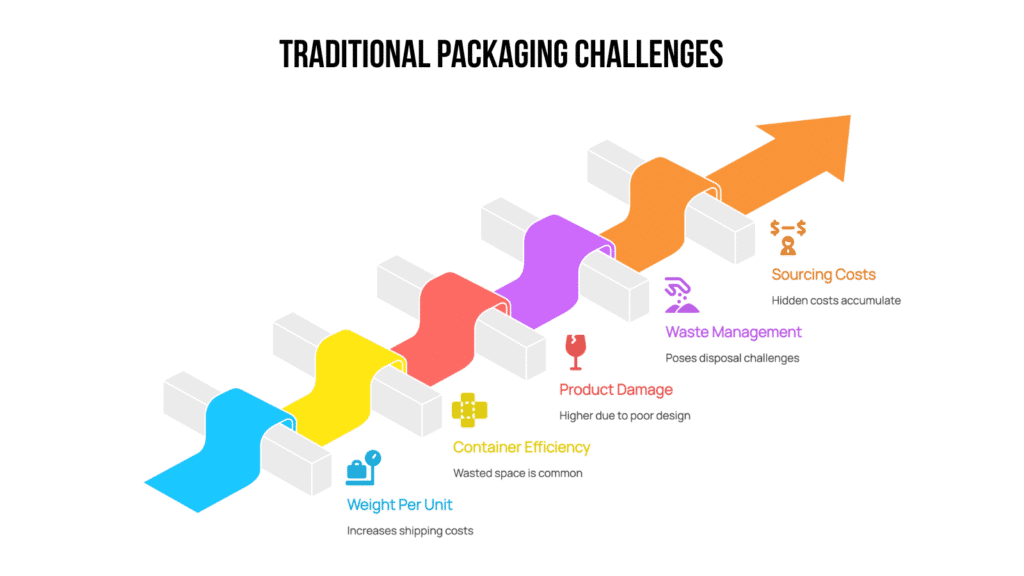
Traditional packaging often hides costs behind short-term savings.
- Wasted space: Bulky designs increase container usage.
- Higher weight: Standard plastic and heavy cardboard add shipping weight.
- Waste management: Customers face disposal challenges, and brands may face penalties in stricter markets.
While conventional packaging might seem cheaper upfront, it often conceals long-term expenses. Bulky or outdated materials can create multiple inefficiencies across the supply chain. For instance, heavy plastic and thick cardboard increase overall shipment weight, leading to higher freight bills. Similarly, oversized packaging wastes valuable container space, making logistics less efficient.
Traditional packaging also introduces disposal challenges for customers, particularly in regions where environmental regulations are strict. Non-recyclable materials can result in penalties or increased waste management costs. Over time, these issues accumulate and inflate sourcing expenses.
In contrast, sustainable packaging eliminates unnecessary weight, minimizes space, and supports recycling systems that reduce long-term waste. Companies that move to greener options save money and also meet more international compliance standards and what customers now ask for.
Cost Benefits of Sustainable Packaging Sourcing
Choosing sustainable packaging sourcing is more than an ethical decision; it’s a financially smart one. When analyzed carefully, sustainable materials and designs consistently deliver measurable cost savings in several ways:
1. Lower transport fees
Lightweight materials reduce freight charges. For importers, this adds up quickly over large volumes.
2. Reduced damage
Eco-friendly packaging is often designed for durability. Less damage means fewer replacements and less wasted inventory.
3. Improved efficiency
Smart packaging designs use less space. This optimizes container loads and warehouse storage.
As shown, sustainable packaging sourcing helps balance efficiency and responsibility, directly influencing how businesses manage sourcing costs over time.
How Green Supply Chain Packaging Transforms Sourcing
Green supply chain packaging extends beyond recyclable boxes; it covers the whole route a product takes from supplier to customer. When importers implement sustainable packaging, they benefit from smoother customs procedures, stronger supplier relationships, and improved brand loyalty.
For instance, suppliers using recycled or renewable materials often experience fewer disruptions during raw material shortages. This stability ensures predictable sourcing costs, which is especially valuable during market fluctuations. Additionally, when every link in the chain prioritizes sustainability, the entire operation becomes more resilient.
Moreover, sustainable packaging enhances brand credibility. Businesses that show environmental responsibility attract eco-conscious customers and tend to have better relationships with regulators and partners. This creates a long-term competitive advantage that extends beyond pricing alone.
Balancing Upfront Costs with Long-Term Savings
At first glance, sustainable packaging may appear more expensive due to biodegradable films, recycled fibers, and new designs. However, this perspective overlooks the full sourcing picture. When importers consider total landed costs, including shipping, returns, and penalties, sustainable packaging often proves to be more economical.
Companies investing in green materials experience:
- Lower freight charges
- Reduced return rates
- Fewer penalties for non-compliant packaging
- Better customer satisfaction scores
In essence, sustainable packaging sourcing pays for itself over time by delivering consistent operational efficiencies and improving overall business resilience.
The Customer Factor in Sustainable Packaging Decisions
Today’s consumers are not passive; they actively seek brands that align with their environmental values. Particularly in markets like Europe and North America, packaging choices can directly influence purchasing decisions and regulatory compliance.
Eco-friendly packaging is now a selling point. Customers are often willing to pay slightly more for products that reflect ethical sourcing and sustainability. This consumer loyalty helps brands reduce marketing costs and customer turnover. As trust grows, so does the willingness to remain loyal, even in competitive markets.
Therefore, sustainable packaging does more than protect goods, it strengthens customer relationships and brand reputation, creating a cycle of loyalty and long-term profitability.
Moreover, eco-friendly packaging for imports is no longer just a thoughtful extra; it has become a powerful selling point that can justify premium pricing. When customers recognize a brand’s commitment to sustainability, they are often more willing to remain loyal, even when prices increase slightly. Ultimately, that sustained loyalty helps reduce marketing expenses and lower customer churn, leading to stronger long-term profitability for the business.
Reducing Sourcing Costs with Sustainable Practices
Businesses aiming to cut costs through sustainable sourcing can take several practical steps.
1. Conduct a packaging audit.
Measure how much your current packaging contributes to container weight and space usage. Even small improvements can generate significant savings.
2. Partner with certified suppliers.
Choose suppliers that hold recognized sustainability certifications to avoid compliance issues and ensure long-term reliability.
3. Test durability and efficiency.
Sustainable packaging should be both protective and eco-friendly. Testing ensures your materials deliver both performance and sustainability.
4. Collaborate strategically.
Work closely with sourcing partners like Importivity to align supplier capabilities with your sustainability goals. Strategic collaboration ensures that your eco-friendly objectives remain cost-effective.
Through these steps, companies can find measurable savings while building a more responsible and efficient supply chain.
Three General Examples of Sustainable Packaging Sourcing
These are general examples of how a packaging change can lower costs. They are not results from a specific company, so run the numbers for your own product.
1. Electronics: molded pulp instead of foam
A brand importing small electronics might replace foam inserts with molded pulp inserts shaped to the product. If the new insert lets the box shrink, more units fit in each carton and each container, which lowers the freight cost per unit. Drop test the new packaging before you switch a full order.
2. Apparel: lighter mailers
A clothing brand that ships orders direct to customers might move from boxes to mailers made from recycled or compostable material. A lighter, flatter mailer can lower parcel postage and take less storage space. Check that it holds up to the weight of your largest order.
3. Food products: lighter wraps
A food brand that ships by air might switch to lighter wraps. Air freight is billed on the greater of a shipment's actual weight and its volume weight, so smaller, lighter packaging lowers the bill. Any material that touches food must meet FDA rules for food contact.
Before you switch, compare the cost per unit of the new packaging with the freight and damage savings, or ask a sourcing partner to run the comparison with your factory. Our CBM Calculator shows how the shipment volume changes with each carton size.
The Future of Sustainable Product Sourcing Strategies
Sustainability is no longer optional; it is an expectation. Governments are tightening packaging regulations, while consumers are demanding transparency and environmental accountability. Businesses that delay adopting sustainable packaging risk facing penalties, increased costs, and reduced customer trust.
Conversely, those who embrace sustainable sourcing are better positioned for long-term growth. Their supply chains become more adaptable, their brand image improves, and their sourcing costs remain predictable even during global disruptions. In the future, sustainable packaging will be the foundation of every efficient sourcing strategy.
Ready to Start with Sustainable Packaging Sourcing?
If your goal is to reduce costs, strengthen your supply chain, and exceed customer expectations, now is the perfect time to transition toward sustainable packaging sourcing. Beyond compliance, it is about building smarter, cost-efficient operations that support both profitability and environmental responsibility.
At Importivity, we help businesses identify reliable, eco-conscious suppliers and implement sourcing strategies that balance cost and sustainability. By choosing sustainable packaging, your company can reduce waste, lower shipping expenses, and cultivate long-term customer trust, all while contributing to a greener planet.
Take the first step today. Discover how sustainable packaging sourcing can reshape your imports, optimize costs, and future-proof your business for success.
frequently asked questions
How does sustainable packaging sourcing reduce costs?
By lowering shipping weight, reducing damage, and improving efficiency in container usage.
Is eco-friendly packaging for imports more expensive?
Eco-friendly packaging for imports can look more expensive upfront, but in sourcing it often reduces costs by lowering freight fees, avoiding penalties, and reducing returns.
What is green supply chain packaging?
It refers to packaging choices that reduce environmental impact across the entire supply chain.
Can sustainable product sourcing strategies improve customer loyalty?
Yes, customers value eco-friendly practices and are more likely to stick with brands that show commitment.
How can businesses start reducing costs with sustainable sourcing?
Audit packaging, choose certified suppliers, and work with sourcing partners who prioritize sustainability.
We qualify the plants that build this kind of product and film the visits, which go out through Source With Jordan.
About the author
Jordan Lewis
Chief Operating Officer, Importivity
Runs Importivity's sourcing operations across China, Vietnam, Mexico and India, from supplier negotiation through delivery to the client's door.
Press and media inquiries: press@importivity.com