How to Find a Manufacturer to Make Your Product
To find a manufacturer to make your product, start with a written spec and bill of materials, decide whether you need an OEM, ODM, contract, or private-label manufacturer, then source candidates through directories, trade shows, referrals, or a sourcing partner. Then vet every candidate with samples, audits, and references before you place an order. The sequence matters: the founders who skip the spec and the vetting are the ones who end up with a garage full of units they can't sell.
This guide is for inventors, first-time founders, and small brands who have a product idea (or a prototype) and need to find the right factory to actually make it. It walks through what to prepare, the four types of manufacturer, where to look, how to vet a factory, and the red flags that separate a real partner from an expensive mistake.
Before you look: write a spec and a bill of materials
No serious manufacturer can quote your product from a description. Before you contact anyone, put together a technical spec (dimensions, materials, tolerances, finishes, packaging) and a bill of materials listing every component. If you have a CAD file, drawings, or a physical prototype, even better. This one document is what turns "can you make this?" into an apples-to-apples quote you can compare across factories.
The clearer your spec, the fewer surprises later. Vague specs are the number-one cause of the "the samples were perfect but the production run was wrong" problem. The factory filled the gaps with the cheapest assumptions available.
Decide what type of manufacturer you actually need
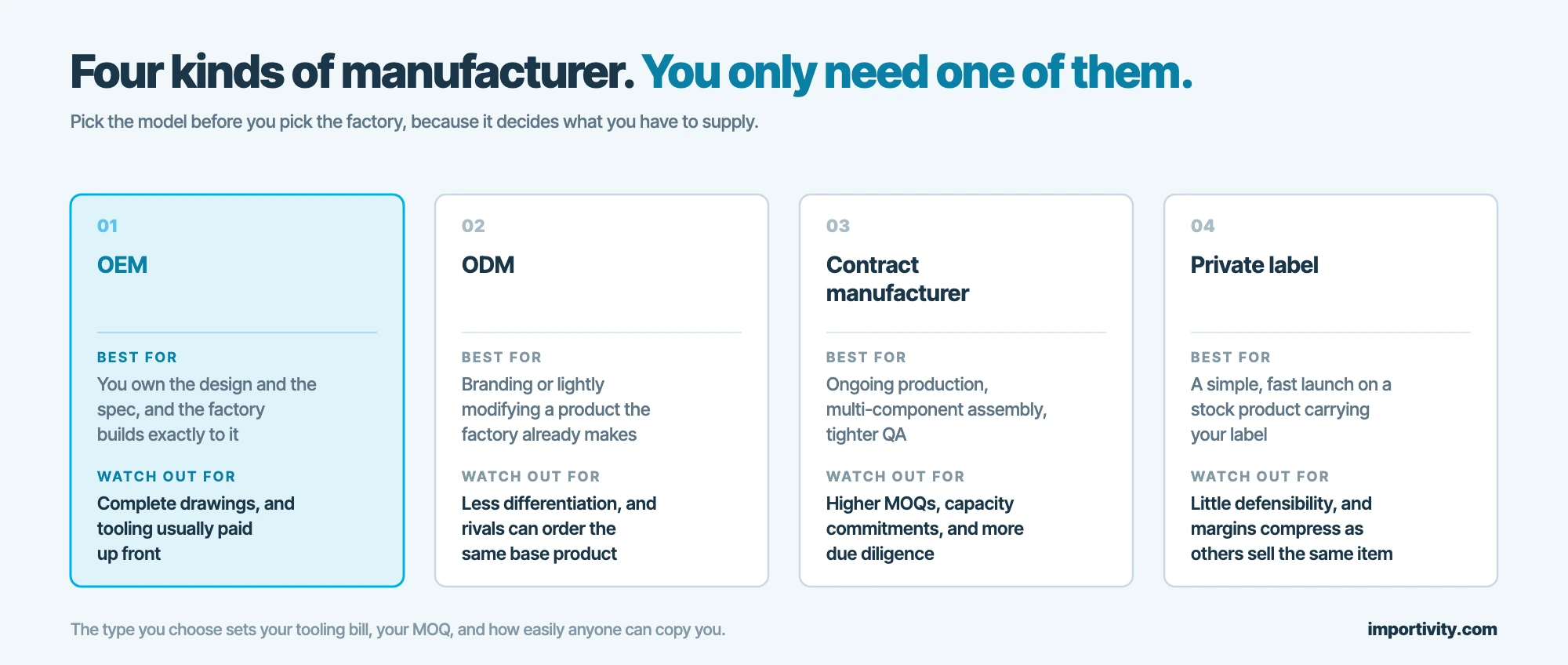
"Manufacturer" covers four very different arrangements. Picking the wrong one wastes weeks of outreach to factories that were never a fit.
| Type | Best for | Watch out for |
|---|---|---|
| OEM (build-to-your-design) | You own the design and spec; the factory builds exactly to it | You need complete drawings and usually pay for tooling/molds up front |
| ODM (adapt an existing design) | You want to brand or lightly modify a product the factory already makes | Less differentiation; competitors can order the same base product |
| Contract manufacturer | Ongoing production, multi-component assembly, tighter QA | Higher MOQs and capacity commitments; more due diligence needed |
| Private label | Simple, fast launch on a stock product with your label | Little defensibility; margins compress as others sell the same item |
If you already know you need an OEM factory specifically, go deep with our guide on how OEM manufacturing works and how to find the right factory, and the breakdown of OEM vs ODM. For everyone else, the rest of this guide applies to any manufacturer type.
Choose where to manufacture
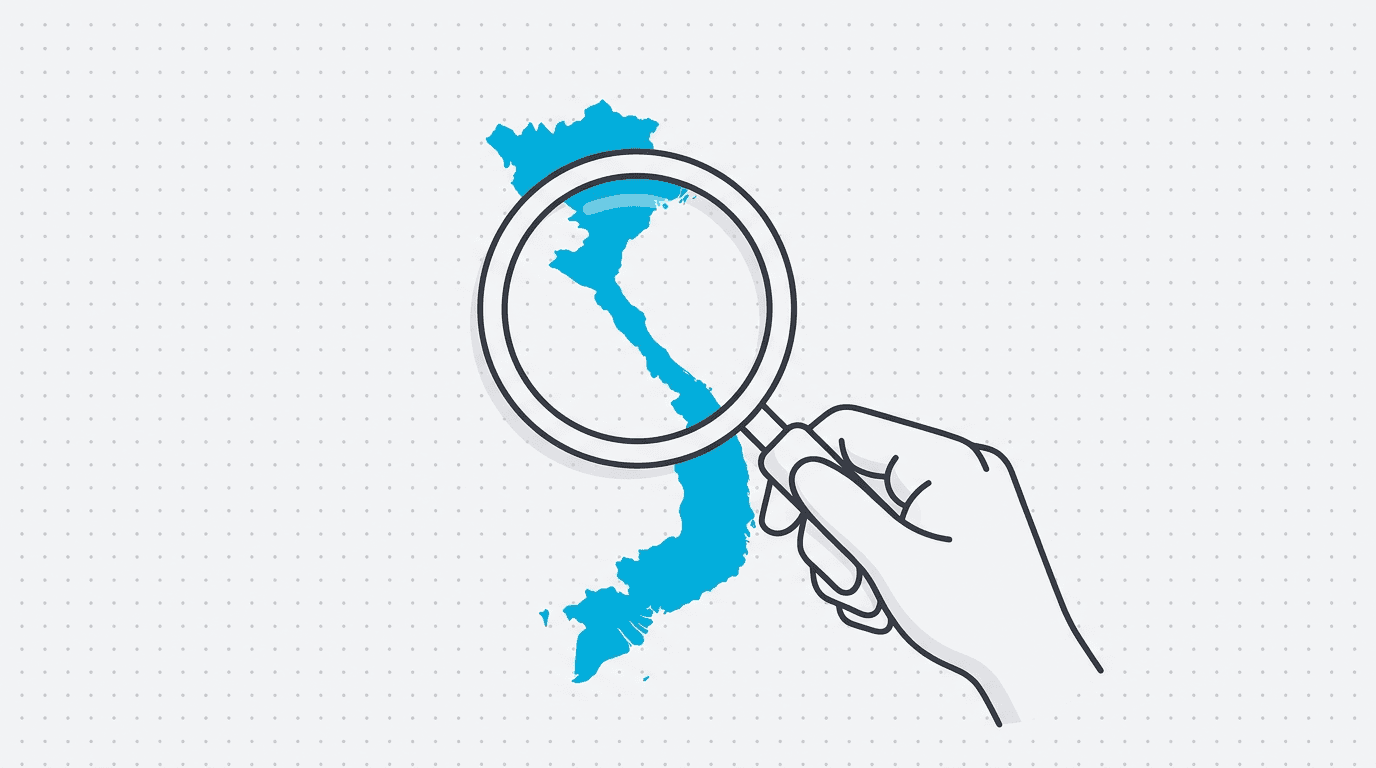
Country choice shapes your cost, lead time, minimum order, and tariff exposure. China still offers the deepest supplier base and tooling ecosystem; Vietnam has become the go-to for apparel, footwear, and furniture; Mexico wins on speed-to-US-market and USMCA tariff treatment; and domestic US manufacturing pays off for low-volume, high-touch, or "Made in USA" products. Compare the trade-offs on our manufacturing-by-country hub and the head-to-head China vs Vietnam breakdown before you commit.
Don't over-optimize the country before you've validated the product. For a first run, proximity and communication often matter more than shaving a few percent off the unit cost.
Where to actually find manufacturers
Once you know the type and rough geography, there are five reliable channels:
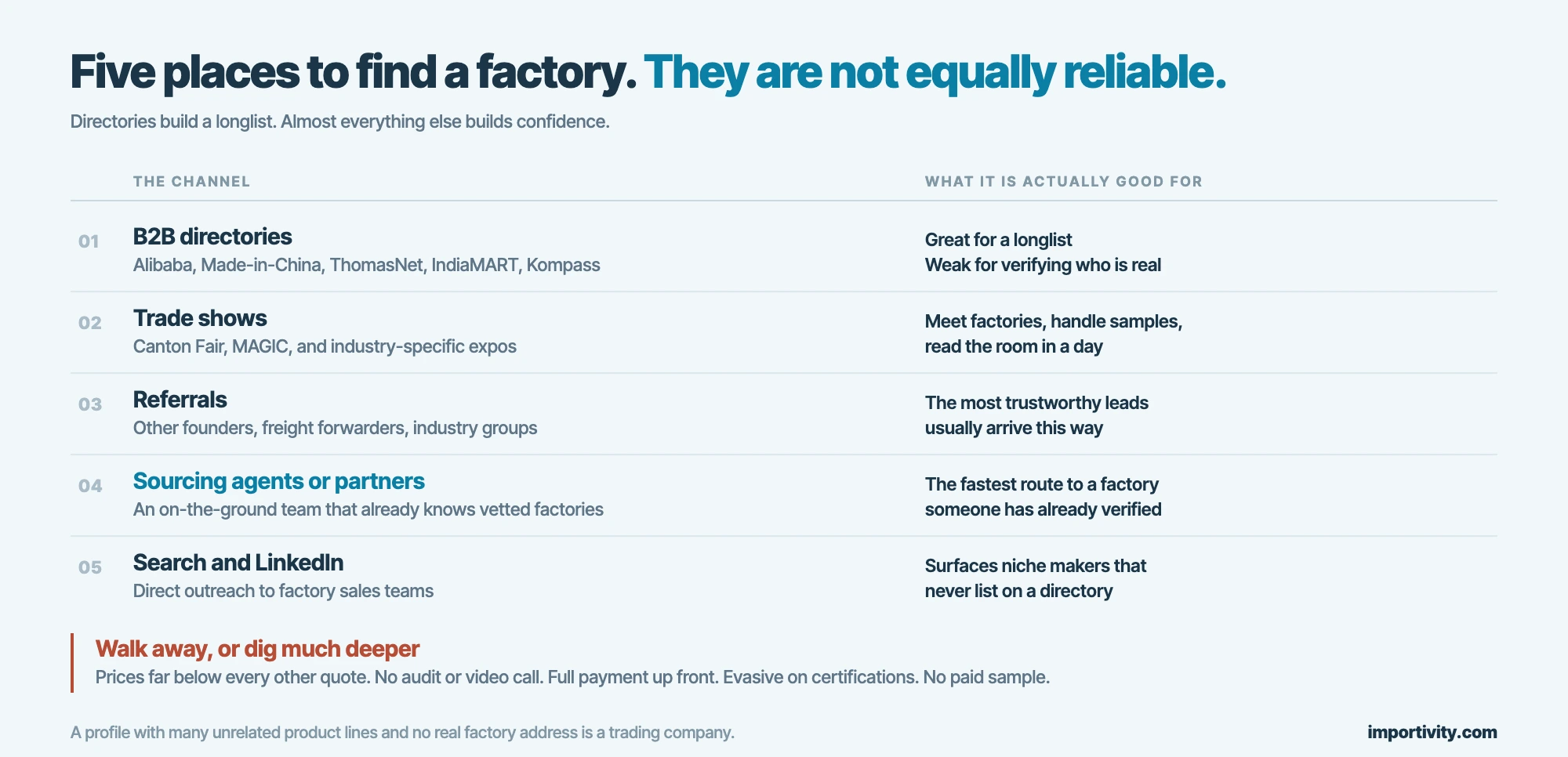
- B2B directories: Alibaba and Made-in-China for Asia; ThomasNet and Maker's Row for US suppliers; IndiaMART and Kompass for other regions. Great for building a longlist, weak for verifying who's real.
- Trade shows: Canton Fair, MAGIC, and industry-specific expos let you meet factories, handle samples, and read the room in a day. The highest-signal channel if you can travel.
- Referrals: other founders in your category, freight forwarders, and industry groups will point you to factories they've actually shipped with. The most trustworthy leads usually come this way.
- Sourcing agents or partners: an on-the-ground team that already knows vetted factories, negotiates on your behalf, and manages QC. This is the fastest route to a verified manufacturer and the one that avoids the most beginner mistakes.
- Search and LinkedIn: for niche or technical products, direct outreach to factory sales teams can surface manufacturers that never list on directories.
Directories get you names; they don't get you a vetted partner. If you'd rather skip the longlisting and land on pre-vetted factories, that's exactly what our manufacturer sourcing service and end-to-end product sourcing do, including samples, audits, and pricing negotiation.
Vet every manufacturer before you commit
Finding factories is the easy part; verifying them is where the money is made or lost. Run every serious candidate through this checklist before you send a deposit:
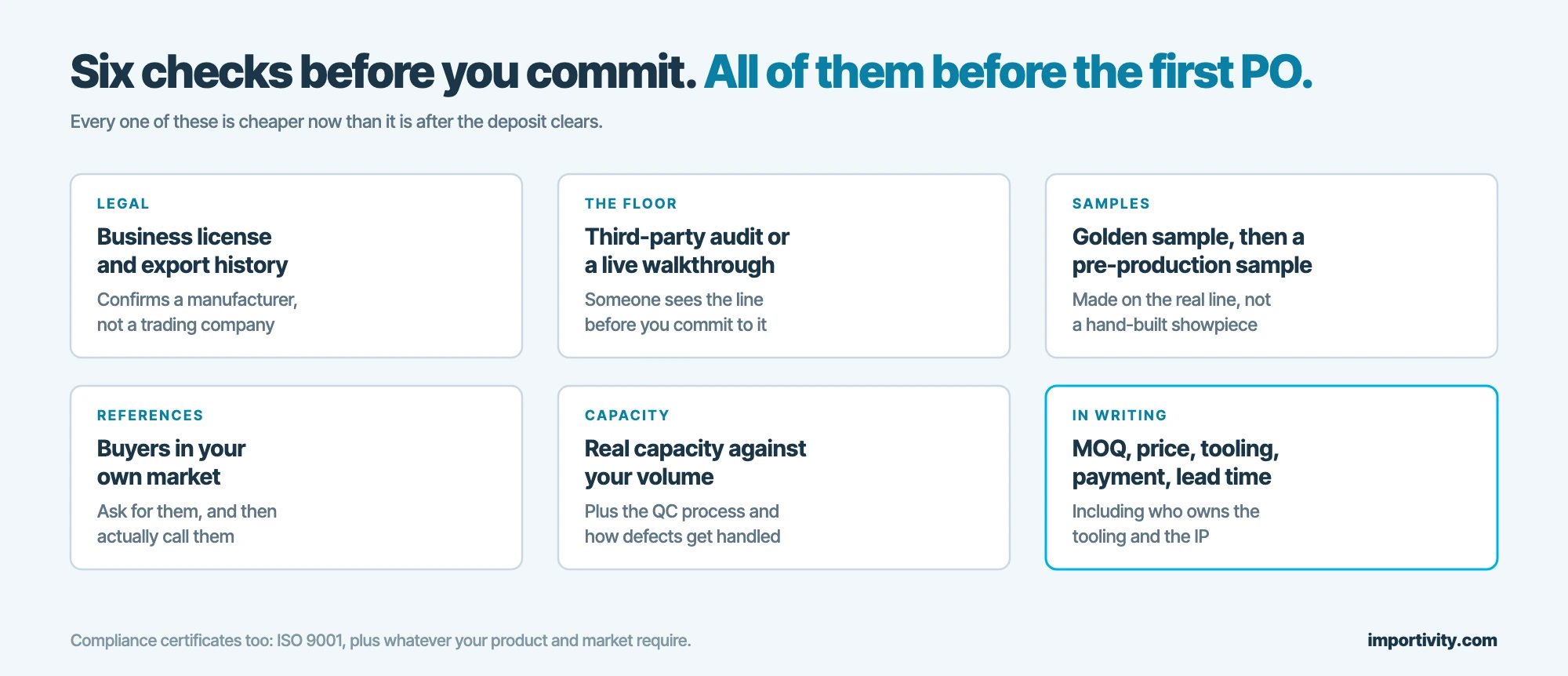
- Verify the business license, company age, and export history to confirm they legally are a manufacturer, not a trading company reselling someone else's line.
- Commission (or request) a third-party factory audit, or at minimum a live video walkthrough of the production floor.
- Order a golden sample, then a pre-production sample made on the real line, not a hand-made showpiece.
- Ask for references from other buyers in your market and actually call them.
- Confirm real capacity against your volume and timeline, plus their quality-control process and defect handling.
- Check the compliance certifications your product and market require (ISO 9001, plus product-specific: FDA, CE, UL, FSC, etc.).
- Get every commercial term in writing: MOQ, unit price, tooling cost, payment schedule, lead time, and who owns the tooling and IP.
For a deeper process, see how we run supplier vetting. The same steps apply whether you found the factory yourself or through an agent.
Get samples, then negotiate terms
Never scale from a promise. Pay for samples from your two or three finalists and compare them against your spec, not against each other's marketing. Once a factory clears the sample stage, negotiate the terms that actually protect you: a realistic MOQ, milestone-based payments (avoid 100% up front), a written lead time with penalties for slippage, and clear ownership of any tooling you paid for. A good manufacturer will welcome these conversations; one that resists them is telling you something.
Red flags that should stop you
Walk away, or dig much deeper, if a manufacturer shows any of these: prices far below every other quote, refusal to allow an audit or video call, pressure to pay the full amount up front, evasive answers about certifications or capacity, no willingness to make a paid sample, or a company profile that reads like a trading company (many unrelated product lines, no real factory address). Each one is a common precursor to a run that arrives late, wrong, or not at all.
If you want to see what this looks like on a live project rather than in a guide, Source With Jordan is where we publish the sourcing itself.
Frequently Asked Questions
How much does it cost to find a manufacturer?
Finding candidates on directories is free; the real costs are samples (roughly $50 to $500 each depending on the product), an optional factory audit ($300 to $1,000), and any tooling or molds for custom products (often $1,000 to $10,000 or more). Using a sourcing partner adds a fee but usually pays for itself by avoiding a failed order.
Can I find a manufacturer with a very small budget?
Yes. Start with private-label or ODM products that don't require custom tooling, keep your first order near the factory's minimum, and lean on free directories and referrals. Just never skip paid samples and basic vetting, because that's the spend that protects the rest of your budget.
Is Alibaba a safe way to find a manufacturer?
Alibaba is fine for building a longlist, but the platform mixes real factories with trading companies. Treat every listing as unverified: confirm they are the actual manufacturer, use Trade Assurance, order samples, and run an audit or video walkthrough before placing a production order.
How long does it take to find a manufacturer?
Building a shortlist takes 1 to 2 weeks; sampling and vetting your finalists usually takes another 3 to 6 weeks. Plan for roughly one to two months from first outreach to a signed order, faster if you use a sourcing partner with pre-vetted factories.
Should I use a sourcing agent or find a manufacturer myself?
Do it yourself if you have a simple product, time to vet factories, and someone who can travel or manage QC. Use a sourcing agent when the product is complex, the stakes are high, or you can't be on the ground, because they bring vetted factories, language and negotiation leverage, and quality control that first-timers rarely have.
About the author
Jordan Lewis
Chief Operating Officer, Importivity
Runs Importivity's sourcing operations across China, Vietnam, Mexico and India, from supplier negotiation through landed delivery.
Press and media inquiries: press@importivity.com