American Manufactured Shoes Explained (Suppliers, Costs and MOQs for Brands)
American manufactured shoes occupy a strange position in the market: hugely desirable to consumers, almost impossible to find at scale, and structurally expensive to produce. If you're a brand weighing domestic footwear production, the first thing to understand is just how small this segment is. Around 99% of shoes sold in the U.S. are imported, and the math behind that number drives every sourcing decision you'll make.
This guide breaks down who actually manufactures shoes in the U.S., what it costs, the minimum order quantities you'll face, where your materials come from, and how tariffs and the FTC's labeling rules change the calculus. The goal is a clear-eyed view of the real trade-offs, not a feel-good pitch for buying American. If you're comparing this path against offshore production, our breakdown of nearshoring vs offshoring tradeoffs is worth reading alongside this.
Importivity works with brands on exactly these decisions, including why local product sourcing is not always the cheaper option. Let's get into the specifics.
The Reality of U.S. Footwear Manufacturing
The domestic footwear industry is a sliver of total consumption. 99% of all shoes sold in the U.S. are imported, with 2.147 billion pairs of shoes imported in 2023, amounting to an average 6.3 pairs of imports per person across the country. Against that, about 25 million pairs of shoes are produced annually in the U.S. In other words, imports outnumber domestic production by roughly 100 to 1.
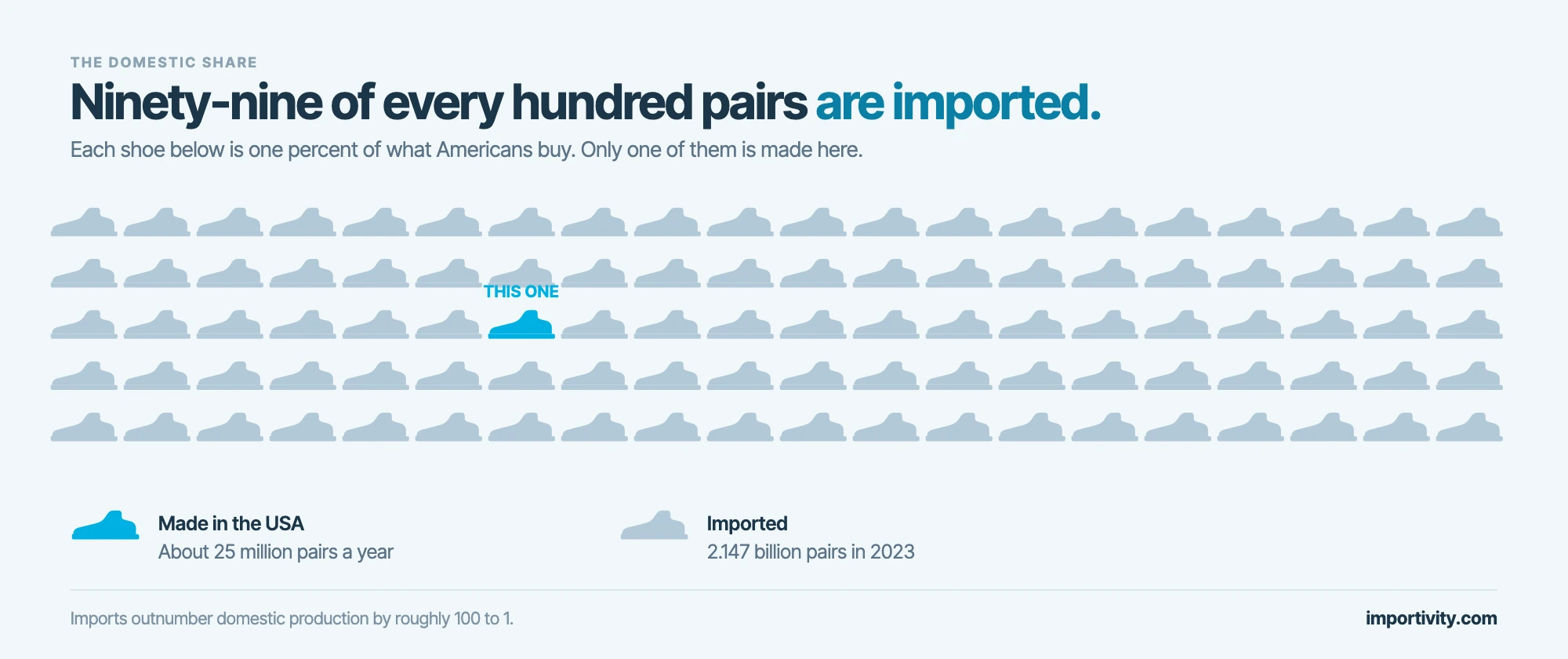
The industry sells real volume in dollars. In 2025, the U.S. imported 6 pairs of shoes for every man, woman, and child in the country, and annual sales topped $121 billion. Demand for American-made product also exists on the consumer side, but it doesn't always convert to purchases at premium prices.
The supplier base is small but not gone. The US is home to 863 footwear manufacturers, according to 2023 data from IBISWorld, a number that has declined by 0.5% per year on average since 2018. Most are concentrated in work boots, military footwear, dress shoes, and niche athletic and comfort categories.
Who Actually Manufactures Shoes in the USA
Domestic production clusters in a handful of categories. Understanding which brands operate factories tells you where the supplier expertise and component supply actually live.
Athletic and Lifestyle
New Balance is the standout. The Made in USA 990 line is built at New Balance's factories in Maine and Massachusetts and contains a brand-stated 70% domestic value. Critically, the rest of the New Balance catalog (Fresh Foam, FuelCell, most lifestyle silhouettes) is manufactured overseas. That partial-line model is the norm, not the exception. Smaller domestic sneaker makers exist too, often built around made-to-order or small-batch models in places like North Carolina, Oregon, and Maryland.
Work Boots, Military and Dress
American work-boot manufacturing is the deepest US-made category by sheer count of operating brands, anchored by Minnesota and the Pacific Northwest. Military footwear is another stronghold, driven by Berry Amendment requirements that mandate domestic sourcing for the armed forces. On the dress side, Alden Shoe Company has been in Middleborough, Massachusetts since 1884 and runs one of the smallest, most respected dress-shoe factories in the country.
The Partial-Line Trap
The single most important nuance for any brand or buyer: most "American" shoe brands only make some of their catalog here. Most are partial-line US manufacturers, meaning some of their catalog is built overseas, so you read the specific model designation, not the brand name. If you're contracting a factory, confirm which lines and constructions are genuinely run domestically.
What American Manufactured Shoes Actually Cost
The cost gap between domestic and overseas production is the entire reason 99% of shoes are imported. Labor drives it.
Overseas, the production cost for a single pair of shoes typically ranges from $10 to $50, depending on the construction materials and assembly techniques used. At the low end, automated injection processes go even lower. Some factories can deliver injection-molded sneakers at just $4.10 per pair when orders meet minimum thresholds of 1,200 units.
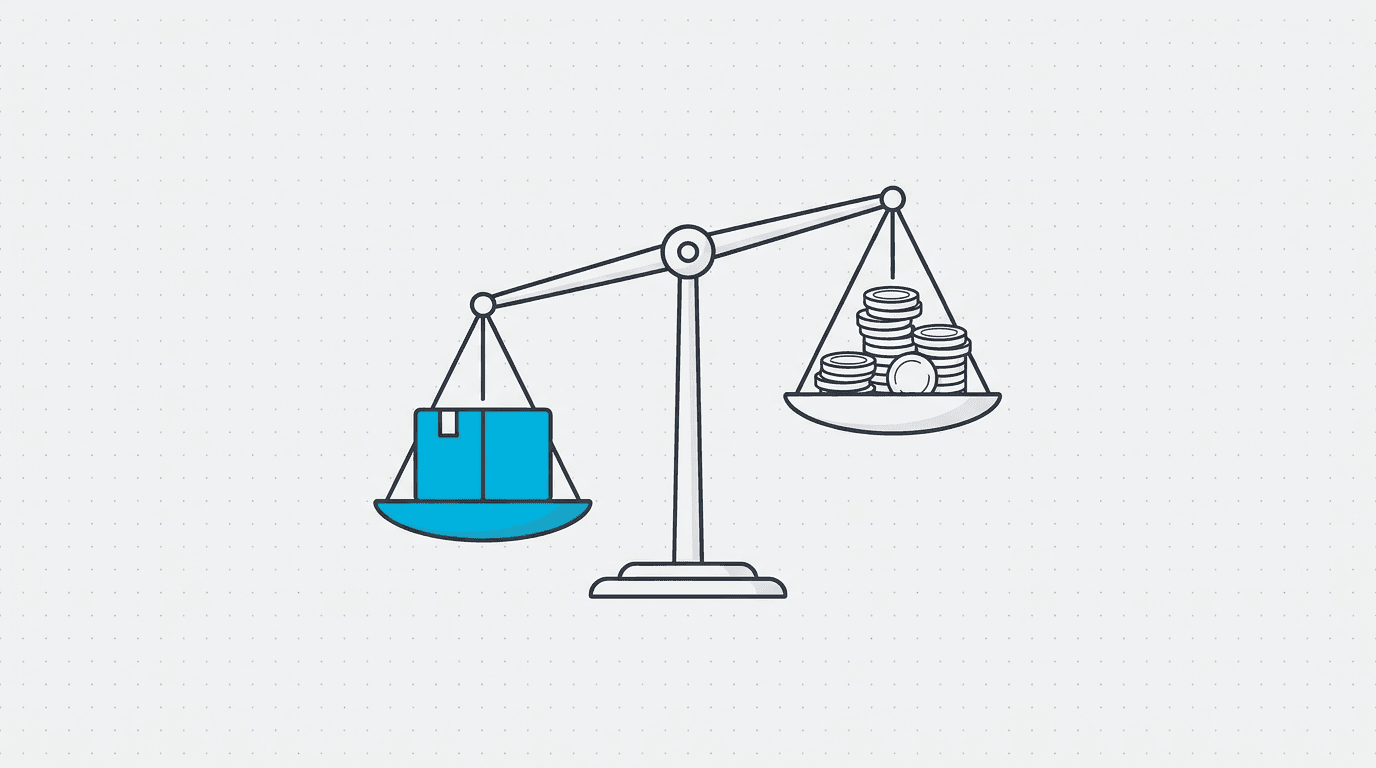
Domestic labor changes the picture dramatically. Industry cost models assume a fully loaded labor rate of $40 per hour for skilled US assembly staff; if one pair takes 4 hours of direct labor, payroll cost per unit is $160, and if high-quality leather and soles cost $80 per pair, labor is 2x the material cost. Even with efficiency gains, you're typically looking at a 2x to 4x premium over comparable Asian production.
| Cost Factor | Overseas (Asia) | U.S. Domestic |
|---|---|---|
| Per-pair production | $10 to $50 typical | Often 2x to 4x higher |
| Skilled labor rate | Low-wage base | ~$40/hr fully loaded |
| Typical MOQ per style | 500 to 6,000+ pairs | 500 to 1,000, lower for made-to-order |
| New outsole/injection mold | $5,000+ | $5,000+ |
| Import duty | Avg ~23.6%, peaks of 48% and 67.5% | None |
| Freight/lead time | Ocean transit, longer | Domestic, shorter |
Minimum Order Quantities and Tooling
MOQs are where many footwear startups stall. They vary by construction, factory size, and how custom your design is.
For semi-handmade and smaller runs, manufacturers that offer semi-handmade production can have an MOQ of 500 to 1,000 pairs on the initial order. Broader industry ranges run higher: the production minimum order quantity will vary from 500 to 6,000 per style, and 500 to 1,000 pairs per colorway. Domestic made-to-order shops can go far lower, but per-pair economics suffer.
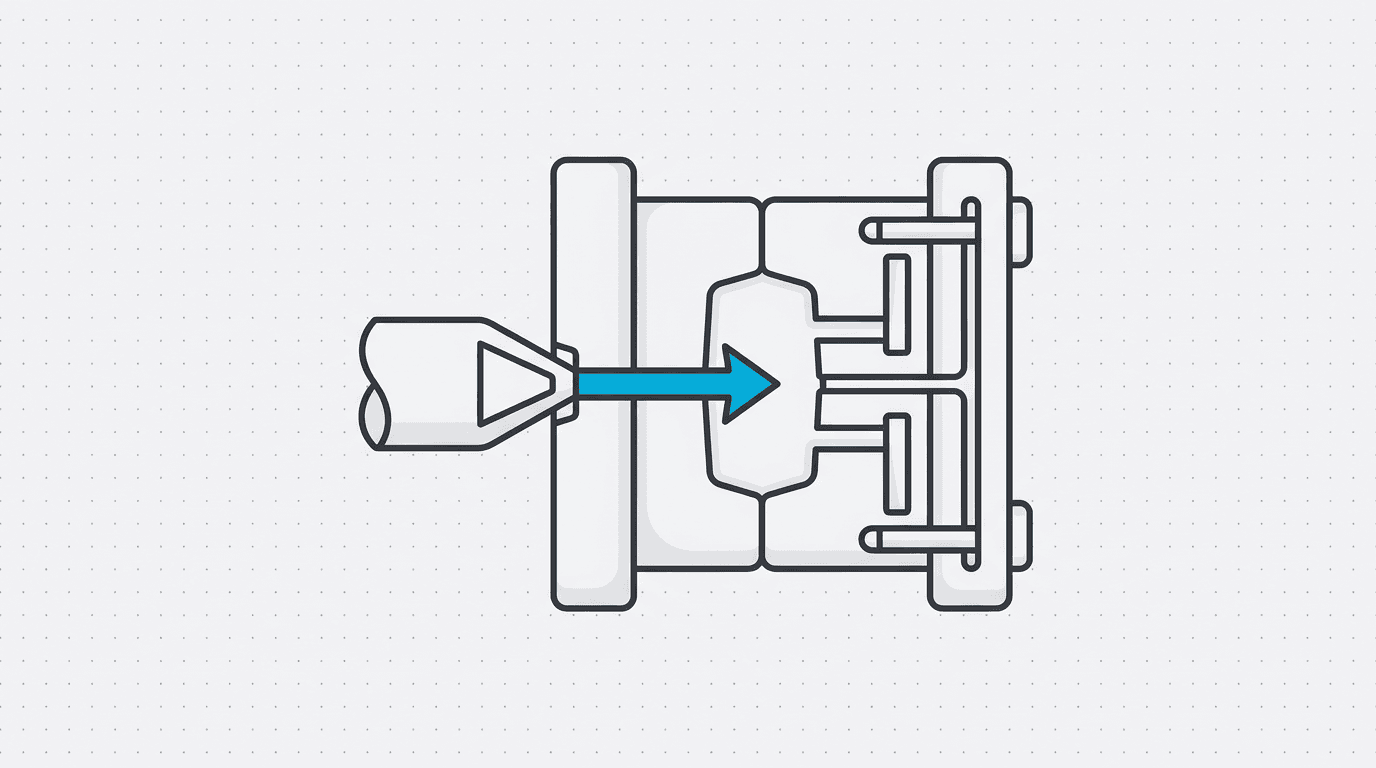
Tooling is a separate upfront cost you must amortize. When a new injection mold is required, be prepared to spend no less than $5,000 for the mold alone. Sampling adds more: the cost of shoe prototype sampling can range from $1,650 to $2,500. Budget these as fixed launch costs and spread them across your first production run. Our pre-production sample process guide walks through how to sequence samples before you commit to mass production.
Materials, Components and the Domestic Supply Gap
Even a factory based in the U.S. doesn't guarantee fully domestic materials. The component supply chain (Tier 2 and Tier 3 suppliers) is heavily globalized. Tier 2 suppliers develop refined raw materials into processed components going into Tier 1 final assembly, like the rubber soles, molded foams, fabric uppers, or insoles used to create the finished shoe.
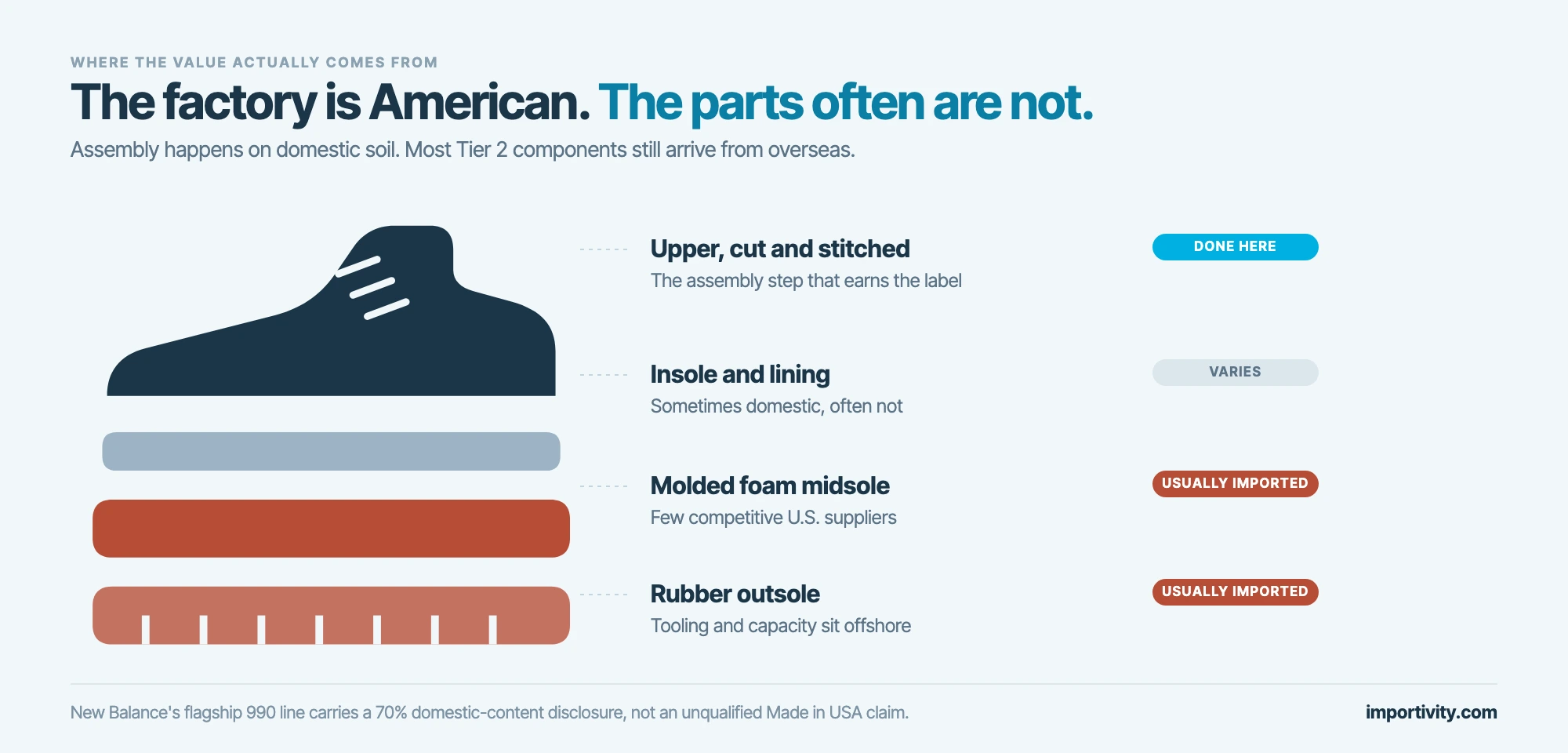
This matters for your labeling claim and your cost. Many domestic brands import soles, foams, or specialty leathers because no competitive U.S. supplier exists. That's exactly why New Balance's flagship line carries a 70% domestic-content disclosure rather than an unqualified claim. If a fully domestic material chain matters to your brand story, vet it at the component level, not just the assembly floor.
Vetting a U.S. or overseas footwear factory follows the same discipline as any sourcing relationship. Use our factory audit checklist to confirm capacity, quality systems, and material traceability before you place an order, and review why the supplier vetting process matters for the broader framework.
Tariffs, Labeling and the Made-in-USA Claim
Footwear tariffs are a real factor in the domestic-vs-import decision because they're unusually steep. Footwear tariffs are some of the highest on any imported consumer good, averaging 23.6% but reaching upwards of 48% and 67.5% on certain footwear types. Domestic production avoids these entirely, which narrows the cost gap, though it rarely closes it on its own.
If you do import, classification discipline is essential because rates swing enormously by HTS code. Our guide to HTS codes and customs classification covers how to avoid costly misclassification, and tariff consulting can identify legitimate ways to reduce your duty exposure.
On labeling, the bar for an unqualified "Made in USA" claim is high. The FTC regulates the 'Made in USA' label, ensuring that products marked as such are genuinely domestically produced. If your shoes are assembled here but use imported components, you'll likely need a qualified claim that discloses the domestic-content percentage. Get this right before you print a single box. For broader certification and compliance questions, see our overview of import product compliance.
When American Manufactured Shoes Make Sense
Domestic production isn't a default choice, but it's the right call in specific situations. The premium is real, and consumers say they value it: over 81% of Americans want to buy shoes made in the USA, even if behavior at checkout doesn't always match. Lean into domestic when the use case justifies the price.
Strong Fits for Domestic Production
- Mandated domestic sourcing, such as Berry Amendment military and government footwear
- Premium dress, heritage, or work boots where craftsmanship is the value proposition
- Made-to-order and small-batch models that can't absorb high overseas MOQs
- Brands whose entire identity is built on a verifiable made-in-USA story
- Short lead times and fast replenishment where ocean freight delays hurt
Where Imports Still Win
- Price-sensitive, high-volume athletic and casual footwear
- Complex constructions needing components no U.S. supplier makes competitively
- Brands without the margin headroom to absorb a 2x to 4x labor premium
For many brands the answer is a hybrid: a small domestic hero line for the story, with the volume catalog produced overseas or nearshore. If you're exploring closer-to-home options short of full domestic, our look at nearshoring to Mexico covers a middle path. Before any decision, run a full landed cost calculation so you're comparing true delivered cost, not just per-pair quotes.
If you want to see what this looks like on a live project rather than in a guide, Source With Jordan is where we publish the sourcing itself.
Frequently Asked Questions
What share of shoes sold in the U.S. are actually made here?
Roughly 99% of footwear sold in the U.S. is imported. The country produces around 25 million pairs domestically each year against more than 2 billion pairs imported, so American manufactured shoes are a niche, premium segment rather than the mainstream supply.
How much does it cost to make a shoe in the USA versus overseas?
Per-pair production overseas typically runs $10 to $50 depending on construction. U.S. assembly labor is far higher, often quoted near $40 per skilled labor hour, which can push direct labor alone past $100 per pair on handcrafted styles. Plan for a 2x to 4x cost gap and price accordingly.
Can a brand label its shoes "Made in USA"?
The FTC regulates the claim. An unqualified "Made in USA" requires that all or virtually all of the product be domestic. If only assembly is domestic or some materials are imported, you must use a qualified claim, such as the stated domestic-content percentage that New Balance uses on its U.S.-made line.
What MOQs should I expect from a U.S. shoe factory?
Smaller domestic and semi-handmade factories often start around 500 to 1,000 pairs per style, with some made-to-order shops accepting far less. High-volume overseas plants demand more. Tooling such as a new injection mold adds $5,000 or more before production, so amortize that across your run.
Do tariffs make American manufactured shoes more competitive?
They narrow the gap. U.S. footwear duties are among the highest on any consumer good, averaging around 23.6% and reaching as high as 48% to 67.5% on some types. Domestic production avoids those duties, but the labor premium usually still outweighs the tariff savings unless you're in a high-value or compliance-driven category.
About the author
Jordan Lewis
Chief Operating Officer, Importivity
Runs Importivity's sourcing operations across China, Vietnam, Mexico and India, from supplier negotiation through landed delivery.
Press and media inquiries: press@importivity.com