What a Pre-Shipment Inspection Checks and What to Do If It Fails

A pre-shipment inspection (PSI) is a random check of your finished, packed order at the factory, run by an inspector you hire, before the goods ship and before you pay the balance. The inspector counts the goods, opens cartons from across the lot, checks the packing and shipping marks, then inspects a sample of units against your spec and approved sample and sends a pass or fail report, usually within 24 hours.
This guide is for US brands and operations leads with an order finishing at an overseas factory who want to know what a PSI will tell them and what it will not. It covers what the inspector checks, when to book, what it costs, how to read the report, what to do when it fails, and how a PSI differs from a during production inspection and a first article inspection. Sample sizes and accept numbers are covered in our guide to AQL sampling, and the wider system the inspection belongs to is in quality control when working with factories in China.
What a pre-shipment inspection checks
Inspection firms run a PSI in much the same order on every job. SGS describes its final random inspection as a check of product quality, quantity, assortment, labeling and packaging condition on a random sample. QIMA lists the same groups plus dimensions, unit weight and product tests. On the day, the work breaks down like this:
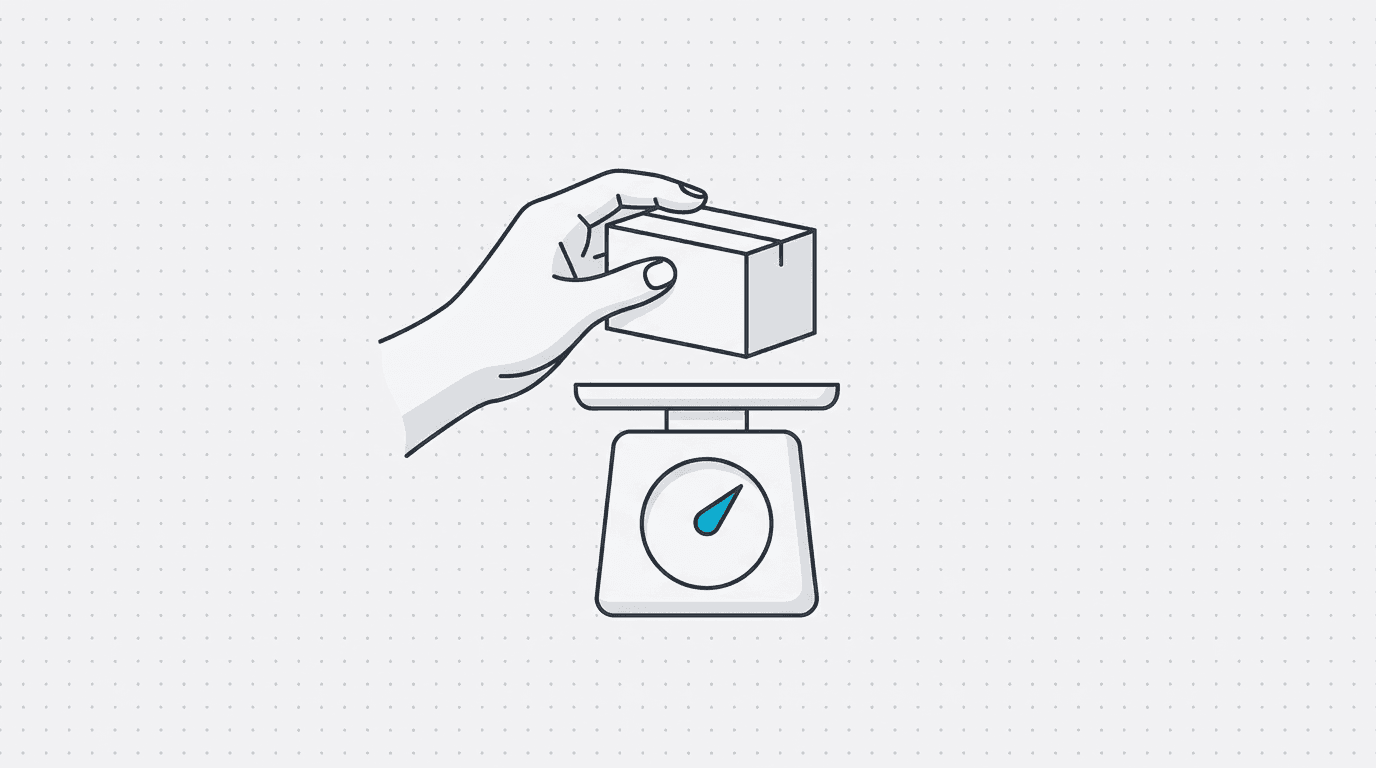
- Quantity. The inspector counts finished units and packed cartons against the purchase order and records anything still unpacked or in production.
- Packing and marking. Carton size and gross weight, shipping marks, inner packing such as polybags and inserts, and a scan of the barcodes to confirm each one matches its SKU.
- Product conformity. Style, color, materials and artwork, along with every label and the logo placement, checked against the approved sample and your spec sheet.
- Workmanship. Each sampled unit is examined and every defect is classed as critical, major or minor. The totals are compared with the accept numbers in your AQL plan.
- Dimensions and weight. Measured on a smaller set of units against the tolerances on your drawing.
- On-site tests. Function checks, carton drop tests and product tests. QIMA lists hi-pot and earth continuity checks for electrical goods and seam strength and fabric weight for textiles.
Two things sit outside a standard PSI. Lab testing for chemicals, flammability or regulatory limits needs a lab and its own sample. And the inspector can only hold the factory to what you wrote down. A defect your spec never mentions becomes a judgment call on the factory floor.
One note on the name. Some importing countries require a government-contracted PSI that checks price, quantity and quality for customs purposes, under the WTO Agreement on Preshipment Inspection. That is a separate program. The PSI in this guide is the one you book and pay for to protect your own order.
When to book a pre-shipment inspection
Book the inspection for the day production is 100 percent finished and at least 80 percent packed into export cartons. SGS and V-Trust both set that threshold for their final inspections. The reason is the sample: the inspector has to pull cartons from across the whole lot, and units that are not yet packed cannot be checked for packing, marks or carton condition.
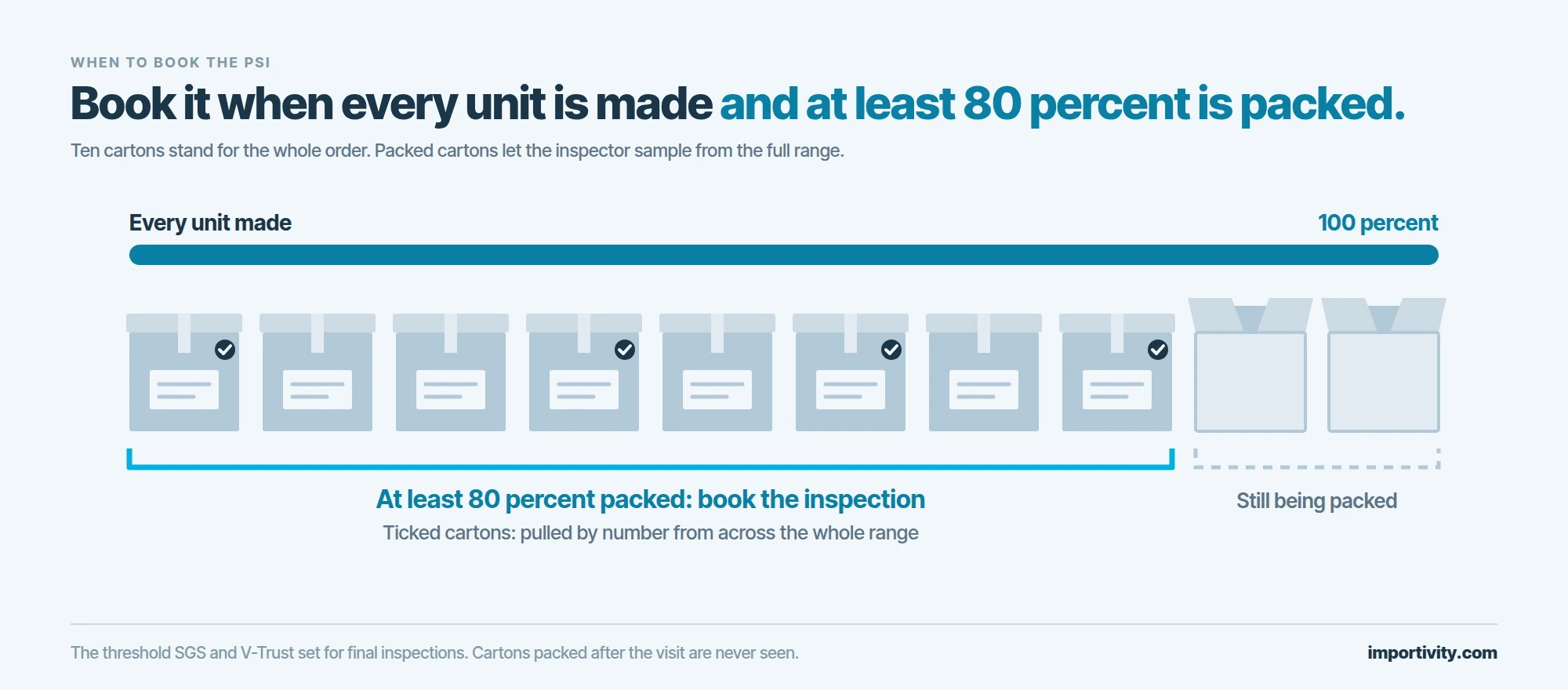
Earlier than that, you pay for a partial look, and the cartons packed after the inspector leaves were never seen. Later than that, the container is often booked and the factory will push to load. V-Trust asks for bookings at least 2 working days before the planned loading date, and SGS quotes 5 to 7 working days to book in general. Ask the factory for its finish date when production starts, not in the last week.
Tie the date to money. If your terms hold back a balance until shipment, make the release depend on a passed report that comes to you from the inspection firm, never one forwarded by the factory. Our guide to negotiating payment terms with a supplier covers how to set up that holdback. The day before, ask for a photo of the packed stock so the inspector does not arrive to half an order.
What a pre-shipment inspection costs
Third-party inspection is priced by the man-day: one inspector at one factory for one working day, report included. V-Trust publishes a standard rate of $268 per man-day in the major Asian manufacturing clusters, with travel and weekend inspections included and the report issued within 24 hours. QIMA says its pricing depends on product type, location and scope, and it sends the report the same day.
The number of man-days is what moves the bill. Four things set it:
- Sample size. Your lot size and inspection level fix how many units get opened. A bigger lot or a tighter level means more units.
- Number of SKUs. Each style or colorway is checked on its own, so 12 colorways take longer than one.
- On-site tests. A function test on every sampled unit, or a long run test, adds hours.
- Location. A factory outside the main clusters can add travel time unless the rate includes travel.
Compare quotes on the total for your order, not the day rate. Ask each firm what the rate includes, how fast the report comes back, and what you pay if the goods are not ready when the inspector arrives. A re-inspection after a fail is a second booking at the same rate, so your purchase order should say the factory pays for it.
How to read a PSI report
A PSI report opens with an overall result, then a summary table, then the detail and the photos. Firms word the result differently. SGS rates each report Conform, Not Conform or Subject to Client's Decision. QIMA gives a pass or a fail. The middle SGS category deserves the most attention, because it means the inspector found something your instructions did not settle and the decision is now yours. Make it in writing.
Read the rest in this order:
- Lot status. Units produced and packed against the order. If less than 80 percent was packed, the sample did not cover the lot and a pass means less than it looks.
- Cartons opened. The carton numbers the inspector pulled. Numbers spread across the whole range are what you want. A run of consecutive cartons from one pallet is not a random sample.
- Defect table. Critical, major and minor counts against the allowed numbers, with each defect named. The same defect found many times points to one process fault. Many different defects found once each point to weak supervision on the line.
- Spec checks. Measured dimensions, weights and colors against your tolerances and the approved sample. Read the measured values, not only the pass mark. A dimension sitting at the edge of its tolerance is a warning for the next order.
- Test results. Which tests ran, on how many units, and the result of each one.
- Photos. Your product, your cartons and your shipping marks, with carton numbers visible. Photos of a generic product or a factory floor prove nothing.
If anything in the report is unclear, ask the inspection firm, not the factory. The inspector saw the goods and wrote the report, so that is where the answer is.
What to do when a pre-shipment inspection fails
A fail means the sample crossed a line you agreed in advance. It does not yet tell you whether the lot can be saved. Hold the balance payment and the freight booking, then work through it in order:
- Find the driver. Read which defects caused the fail. One repeated defect usually has one cause the factory can fix. Defects scattered across many units usually mean the lot needs sorting.
- Get a written plan. Ask for the root cause, what will be reworked or sorted, and a new ready date within a day or two.
- Pick the remedy. Rework and re-inspect for defects that can be fixed. Sort 100 percent of the lot, by the factory or a third party, when good and bad units are mixed. Accept a price reduction only for minor cosmetic defects you could still sell. Reject and remake for critical defects.
- Re-inspect before release. Book the same plan or a stricter one, at the factory's cost if your purchase order says so. Photos of reworked units are not a re-inspection.
- Record it. Add the defect to your defect list and to the factory's record so the next order starts with the problem named. A supplier scorecard is the place to keep that history.
Never accept a critical defect at a discount. A unit that is unsafe or illegal to sell stays that way at any price, and a discount does not move the problem off your brand.
Pre-shipment inspection vs DUPRO vs first article inspection
A PSI is the last of several checks an order can carry, and each one answers a different question at a different point in the run. A first article inspection proves the tooling can make the part to the drawing. A during production inspection (DUPRO) catches a process drifting out of spec while most of the order is still unbuilt. The PSI decides whether the finished lot ships.
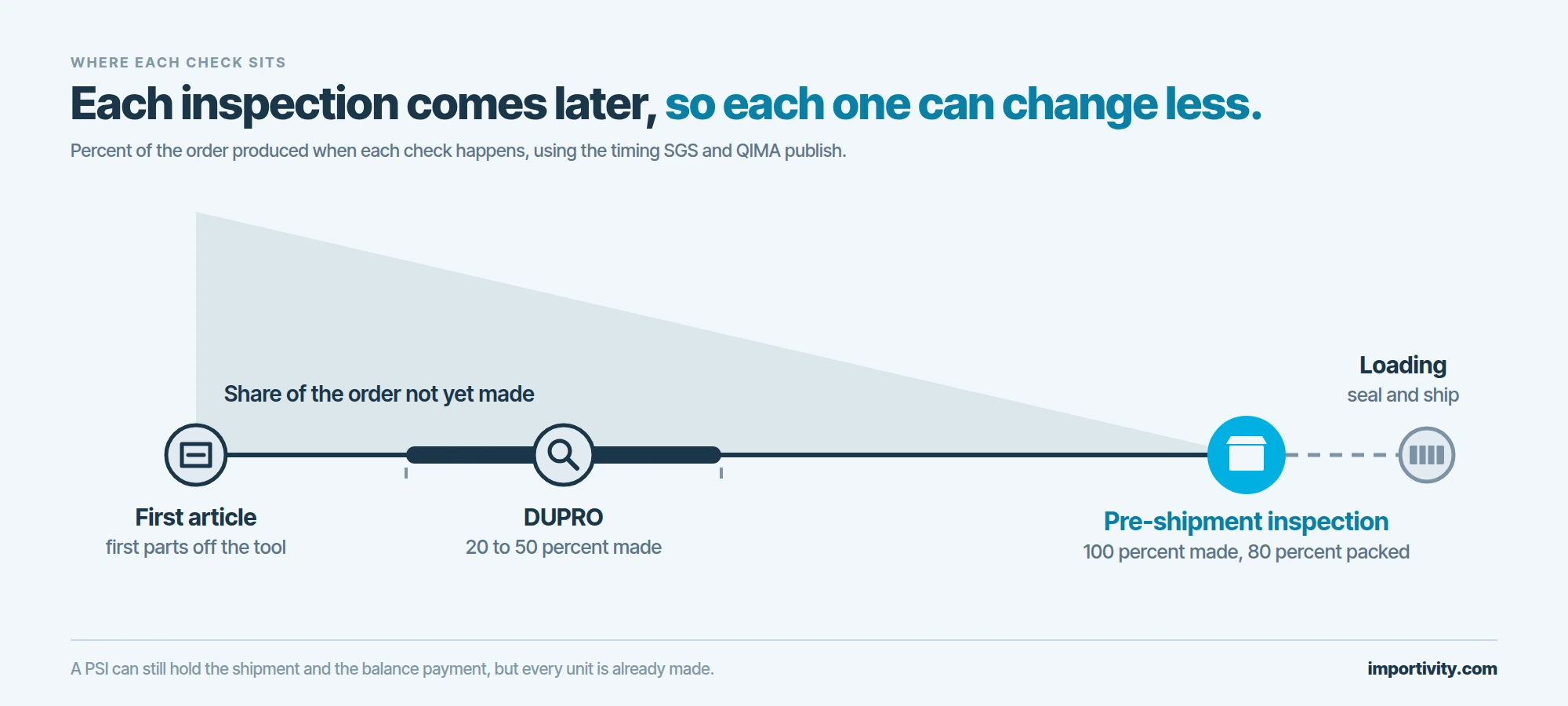
Firms place these checks at slightly different points. SGS runs an initial production check when 10 to 20 percent of the goods are produced and its DUPRO at 30 to 50 percent. QIMA books its DUPRO once 20 percent of the order is produced. In practice a DUPRO falls somewhere between 20 and 50 percent.
| Inspection | When it happens | What it can still change |
|---|---|---|
| First article inspection | First parts off new tooling or a new process, before mass production | The tool or the process itself, before thousands of parts exist |
| Initial production check | 10 to 20 percent of goods produced (SGS) | Wrong material, wrong color or a bad setup, with most of the order still unmade |
| During production inspection (DUPRO) | From 20 percent (QIMA) or 30 to 50 percent (SGS) produced | A drifting process, while there is still time to correct the rest of the run |
| Pre-shipment inspection (PSI) | 100 percent produced and at least 80 percent packed | Whether the lot ships, gets reworked or gets sorted, and when you pay the balance |
| Loading supervision | During container loading | The quantity loaded, the carton condition and the container seal |
For a first order with a new factory or new tooling, book a first article inspection, a DUPRO and a PSI. For a repeat order from a factory with a clean record, a PSI alone is usually enough. A factory audit is a different thing again: it checks the supplier before you order, not the goods. Our factory audit checklist covers that step, and our guide to first article inspection covers the tooling stage.
What to send the inspection firm before the day
The inspector can only hold the factory to what is in the booking. Send this pack to the inspection firm directly, not through the factory, a few days before the date:
- The PO number, SKU list and quantities, the factory address and a contact on site
- Photos of the approved golden sample from every side, and where the physical sample is kept (our guide to the pre-production sample process covers how to approve one)
- The spec sheet, with every dimension and its tolerance, the materials and the Pantone references
- The artwork and barcode files for every label, plus your carton marking instructions
- Your defect list with each defect classed critical, major or minor, and photos of the borderline cases
- The AQL levels, the on-site tests to run and what counts as a pass for each test
- An instruction to pull cartons by carton number from across the whole lot
- Where the report goes: to you, on the day of the inspection
If you do not yet have a defect list or a spec pack an inspector can work from, build them before the first order rather than after the first fail. Writing the plan, briefing the inspector and reading the report with you is the work our quality control service does for US brands, before production, during the run and before shipment.
Frequently Asked Questions
How much does a pre-shipment inspection cost?
Most third-party firms in Asia charge by the man-day, meaning one inspector at one factory for one working day, report included. V-Trust publishes $268 per man-day in the main Asian manufacturing clusters with travel included, while QIMA prices by product type, location and scope. A large lot, many SKUs or long on-site tests add man-days, so compare the total quote for your order.
When should a pre-shipment inspection be scheduled?
Schedule it for the day production is 100 percent complete and at least 80 percent packed into export cartons, so the inspector can pull cartons from across the whole lot. Book several working days ahead, since SGS quotes 5 to 7 working days in general. Confirm the date with a photo of the packed stock the day before.
What happens if a pre-shipment inspection fails?
Hold the balance payment and the freight booking, find which defects caused the fail, and ask the factory for a written rework or sorting plan. Fixable defects are reworked and re-inspected, mixed lots are sorted, and critical defects mean rejection and remake. The re-inspection should be at the factory's cost if your purchase order says so.
What is the difference between a pre-shipment inspection and a DUPRO?
A DUPRO happens during production, usually between 20 and 50 percent complete, and catches problems while most of the order is still unmade. A pre-shipment inspection happens when production is finished and mostly packed, and it decides whether the lot ships. A DUPRO can change how the rest of the order is made. A PSI can only change what happens to goods already made.
Should the factory arrange the pre-shipment inspection?
No. Book and pay the inspection firm yourself, send it your spec and defect list directly, and have the report sent to you on the day. When the factory books the inspector or forwards the report, the factory controls what you see and when you see it.
About the author
Jordan Lewis
Chief Operating Officer, Importivity
Runs Importivity's sourcing operations across China, Vietnam, Mexico and India, from supplier negotiation through landed delivery.
Press and media inquiries: press@importivity.com