Letters of Credit Explained: A Trade Finance Guide for Importers
A letter of credit import transaction comes down to one idea: the bank becomes the guarantor so neither side has to trust the other blindly. Your supplier ships knowing a bank has committed to pay. You pay knowing the bank only releases funds when documents prove the goods shipped as agreed. That's the whole mechanism, everything else is paperwork and timing.
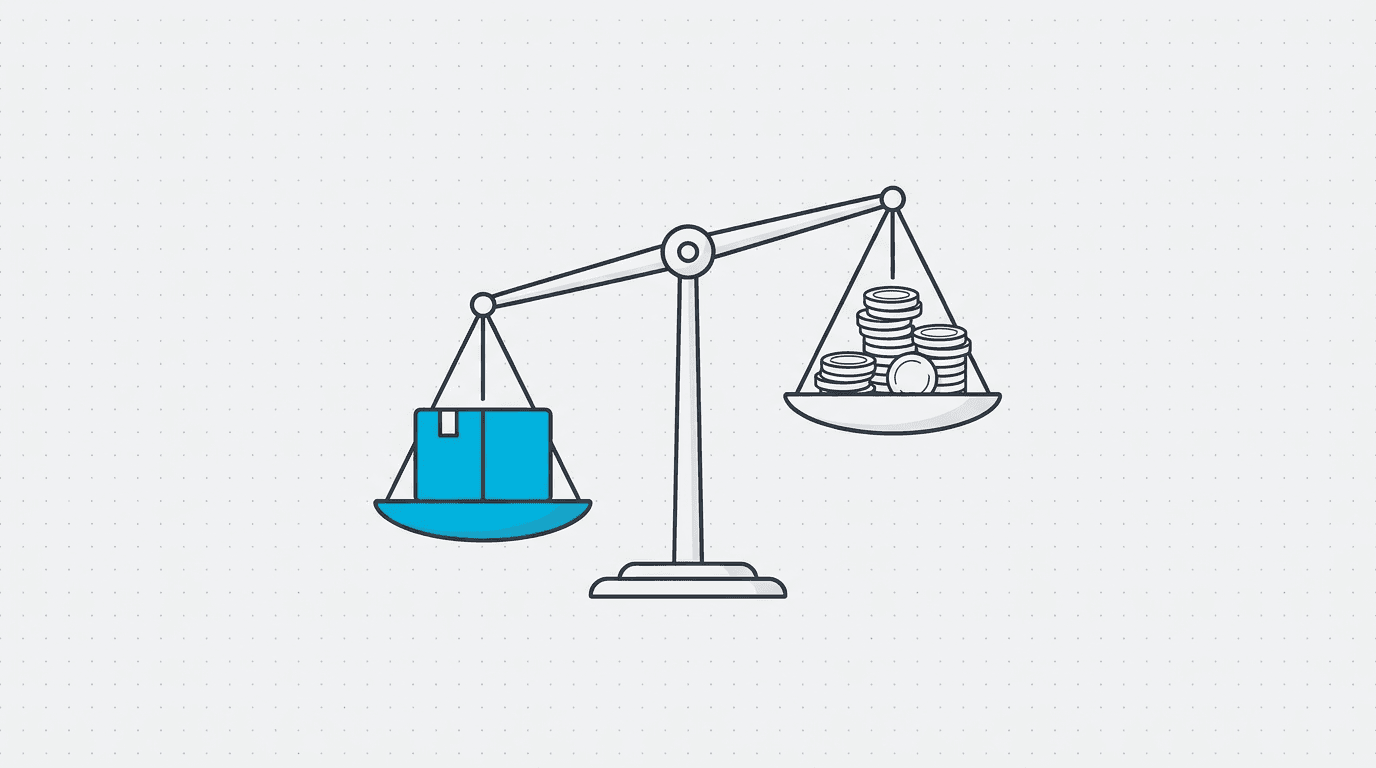
LCs get a reputation for being complicated, and they are, if you use them wrong. Slap an LC on a $4,000 repeat order from a supplier you've worked with for three years and you'll pay $500 to $1,200 in bank fees for zero added safety. However, use one on a $120,000 first-time order from a new factory in a risky market and it might be the only thing standing between you and an expensive dispute. Knowing when an LC is the right tool, and when it's overkill, is the real skill.
This guide walks through how an LC actually works, the types you'll encounter, and the document rules that trip importers up. It also covers the real costs and a straight comparison against the other payment structures you'll likely choose between. For context on how LCs fit into your broader leverage with a supplier, see our guide on how to negotiate the best payment terms before you commit to any structure.
Costs: What an LC Actually Costs You
A $50,000 letter of credit paid at sight (paid as soon as the bank accepts the documents) costs the buyer about $615 in bank fees, or 1.2% of the order, if nothing in it has to change. Each change adds about $75. The seller pays its own bank to receive the LC, and usually pays any fee for documents that don't match. US banks don't publish their LC fees, so the figures below come from the import and export fee guide National Bank of Canada publishes. It charges these fees in US dollars on a US dollar LC. Ask your own bank for its fees in writing before you apply; they will differ.
| Fee | Published rate | On a $50,000 sight LC | Who usually pays |
|---|---|---|---|
| Issuing the LC | 0.65% of the LC value at sight (0.90% for a term LC), at least $300 | $325 | Buyer |
| Drafting the LC text | From $125 | $125 | Buyer |
| Checking the seller's documents | $75 a set | $75 | Buyer |
| SWIFT message (the bank-to-bank network) | $30 | $30 | Buyer |
| Courier to the United States | $60 | $60 | Buyer |
| Buyer's total with no changes | $615 (1.2%) | ||
| Each change to the LC (an amendment) | $75 | $75 each | Whoever asks for the change |
| Documents that don't match the LC (a discrepancy) | $125 a set | $125 each time | Usually the seller, taken out of its payment |
| Advising (the seller's bank passes the LC on) | $125 | $125 | Seller |
| Confirmation (a second bank also guarantees payment) | Quoted case by case | Depends on the bank and country | Usually the seller, who asked for it |
Field 71D of the LC, shown in the sample below, states who pays which bank's charges, so agree on it with the factory before you apply. Other banks price the issuing fee differently: UOB in Singapore charges 0.125% of the LC value per month, so an LC that stays open longer costs more. Your bank will also either hold cash equal to the LC value as security or count the LC against a trade credit line and charge interest, which ties up your working capital until the bank pays. The US International Trade Administration calls LCs "relatively expensive" for this reason, and they rarely make sense on orders under $20,000.
Import Letter of Credit Format: What the Document Actually Looks Like
Banks send an import letter of credit as a SWIFT MT700 message, a fixed list of numbered fields, and almost all of them follow UCP 600, the International Chamber of Commerce (ICC) rules for letters of credit. Here is a sample for a $50,000 order of mugs from a factory in China, field by field. The field numbers and names follow the MT700 standard as set out in Wells Fargo's guide to the SWIFT MT700.
| Field | Sample entry | What to check |
|---|---|---|
| 40A Form of documentary credit | IRREVOCABLE | The LC can't be cancelled without everyone's agreement. Revocable LCs are no longer issued. |
| 20 Documentary credit number | ILC-26-0412 | Put this number on every document and email. |
| 31C Date of issue | 261201 (December 1, 2026) | Dates are written year, month, day. |
| 40E Applicable rules | UCP LATEST VERSION | This means UCP 600, the ICC rule book most LCs follow. |
| 31D Date and place of expiry | 270215 CHINA | The documents must reach a bank in China by February 15, 2027. |
| 50 Applicant | Your company's legal name and address | Use the name on your bank account. |
| 59 Beneficiary | The factory's registered name and address | Copy it from the factory's business license. One wrong letter is a discrepancy. |
| 32B Currency code, amount | USD 50,000.00 | |
| 39A Amount tolerance | 05/05 | The invoice may be up to 5% over or under the amount. |
| 41a Available with, by | ANY BANK BY NEGOTIATION | Where and how the factory gets paid. |
| 42C Drafts at | SIGHT | Paid when the documents are accepted. A term LC says, for example, 60 DAYS AFTER B/L DATE. |
| 43P Partial shipments | NOT ALLOWED | Allow them if the order might ship in two lots. |
| 43T Transhipment | ALLOWED | Most ocean freight changes ships on the way. Banning it causes discrepancies. |
| 44E Port of loading | NINGBO, CHINA | |
| 44F Port of discharge | LOS ANGELES, USA | |
| 44C Latest date of shipment | 270131 | Leave at least two weeks between this date and the expiry date. |
| 45A Description of goods | 5,000 PCS CERAMIC MUGS 12 OZ AS PER PO 1187, FOB NINGBO | Keep it short. Every document has to match it word for word. FOB (Free On Board) means the factory's price covers loading onto the ship. |
| 46A Documents required | Signed commercial invoice in 3 copies, packing list, full set of clean on-board bills of lading, inspection certificate issued by [named inspection company] | List the inspection certificate here and the bank can't pay until the goods pass inspection. |
| 47A Additional conditions | USD 125 DISCREPANCY FEE WILL BE DEDUCTED FROM PAYMENT FOR EACH DISCREPANT PRESENTATION | Extra terms, such as who pays the discrepancy fee. |
| 71D Charges | ALL BANK CHARGES OUTSIDE THE ISSUING BANK ARE FOR THE BENEFICIARY'S ACCOUNT | Who pays which bank's fees. |
| 48 Period for presentation in days | 21/FROM SHIPMENT DATE | The factory has 21 days after shipment to hand over the documents, and never later than the expiry date. |
| 49 Confirmation instructions | WITHOUT | Change to CONFIRM if the factory wants its own bank to guarantee payment too. |
Your bank gives you an application form, and the bank writes the MT700 from it. What you control is the documents list and the dates. Those two areas cause most of the discrepancies (documents that don't match the LC) covered later in this guide.
The Trust Gap LCs Are Designed to Solve
Every first-time international transaction has the same standoff: the seller won't ship until they know they'll be paid, and the buyer won't pay until they know the goods are real and on the way. Wire transfers resolve the standoff by forcing one side to go first, usually the buyer, which means you absorb all the risk upfront.
A letter of credit sidesteps this standoff by introducing a neutral intermediary with real financial standing. Instead of paying your supplier directly, you instruct your bank to issue a conditional payment guarantee. The bank then promises to pay the supplier a set amount by a set date, but only if the supplier presents a precisely defined set of documents proving the shipment happened as agreed.
This structure matters most in four situations: you're dealing with a factory for the first time; the order is large enough that non-delivery would seriously hurt your business; the supplier is in a country where legal recourse is slow or expensive; or the supplier is new and nervous about working with an unknown foreign buyer.
How an LC Transaction Actually Flows
There are four parties in a standard LC transaction. Understanding what each one does clears up most of the confusion.
- Applicant (you, the importer): You apply to your bank for the LC, specify the terms, and provide cash collateral or a credit line to back it.
- Issuing bank (your bank): Issues the LC in favor of the supplier. Takes on the payment obligation if documents are compliant.
- Advising/negotiating bank (supplier's bank): Receives the LC from the issuing bank and notifies the supplier it exists. If the LC is confirmed, this bank also adds its own payment guarantee on top of the issuing bank's.
- Beneficiary (your supplier): Ships the goods, gathers the required documents, and presents them to their bank to trigger payment.
The Step-by-Step Payment Flow
The flow, step by step:
- You and the supplier agree on LC terms in your purchase contract.
- You apply to your bank; they issue the LC and transmit it via SWIFT to the supplier's bank.
- The supplier's bank advises the supplier: "Your buyer's bank has issued a payment guarantee. Here are the conditions."
- The supplier ships the goods and collects documents, bill of lading, commercial invoice, packing list, certificate of origin, inspection certificate, and any other documents specified in the LC.
- The supplier then presents documents to their bank within the deadline stated in the LC (usually 21 days after shipment, with an overall LC expiry date).
- The bank checks the documents for discrepancies. If everything matches, they forward the documents to the issuing bank and payment flows.
- Your bank releases payment and sends you the documents, which you use to clear customs.
Key point: Banks deal in documents, not goods. Your bank is not inspecting the cargo. Instead, they check whether the paperwork complies with the LC terms letter-for-letter. A typo in a company name can create a discrepancy that delays payment for days and adds extra fees.
Types of Letters of Credit
The LC world has a lot of jargon. Here's what the main types actually mean and when each applies.
| LC Type | What It Means | When to Use It |
|---|---|---|
| Irrevocable | Cannot be canceled or amended without agreement from all parties. Nearly all commercial LCs are irrevocable. | Standard for any real transaction, avoid revocable LCs, they offer no real protection. |
| Confirmed | The advising bank adds its own payment guarantee on top of the issuing bank's. Protects supplier against issuing-bank risk. | When your bank is in a country with perceived credit risk or when the supplier's bank requires it as a condition of doing business. |
| Sight LC | Payment is due immediately upon presentation of compliant documents, typically within 5 business days. | When the supplier needs fast payment and you have the liquidity to fund it upon shipment. |
| Usance / Deferred Payment LC | Payment is due at a fixed number of days after shipment or document presentation (e.g., 60 or 90 days). Effectively extends credit to you. | When you need time to sell inventory before paying the invoice. Common on larger, longer-lead-time orders. |
| Transferable LC | Allows the original beneficiary (your supplier) to transfer part or all of the LC to a sub-supplier. | When your direct supplier is a trading company sourcing from a factory, the factory can receive payment directly. |
| Standby LC (SBLC) | Functions as a guarantee of last resort, only drawn if the applicant defaults. Closer to a bank guarantee than a payment mechanism. | For ongoing supplier relationships where you want to provide payment security without processing every invoice through a full LC. |
Document Requirements and the Discrepancy Trap
This is where most LC problems happen. A standard LC will list the documents the supplier must present, and they must match the LC terms exactly. The most common required documents:
- Commercial invoice (must match LC amount and description precisely)
- Full set of clean, on-board bills of lading (typically 3 originals)
- Packing list
- Certificate of origin (often specified: issued by Chamber of Commerce, Form A, etc.)
- Inspection certificate (third-party inspection, issued by a named firm)
- Insurance certificate (if shipment is CIF)
A "discrepancy" is any mismatch between the documents and the LC terms. Common examples include: the invoice lists the product description differently than the LC; the bill of lading shows a slightly different consignee name; or the shipment date falls one day past the latest date specified. Banks charge a discrepancy fee, typically $50 to $150 per discrepancy, and payment is held until the issue is resolved, either by correcting documents or by you waiving the discrepancy.
Why Discrepancies Are So Common
Studies by ICC (International Chamber of Commerce) show that roughly 60 to 70% of LC presentations contain at least one discrepancy on first submission. That's not because suppliers are careless. It's because LCs are often drafted loosely while the document-matching standard is strict. To reduce this risk, spend time on the LC application. Be precise but not over-specific. Don't require a description on the invoice that the supplier can't reproduce exactly from their system.
Rule of thumb: The more unusual or detailed your document rules, the higher your discrepancy risk. Keep the LC terms tight and functional, not exhaustive.
LC vs. Other Payment Methods: When Each Makes Sense
Understanding where LCs sit relative to other structures is essential before choosing. For a broader look at your options, see our guide on making a payment to an overseas supplier and our deep-dive on import-export payment terms that can protect your margins.
| Payment Method | Buyer Risk | Seller Risk | Typical Cost | Best For |
|---|---|---|---|---|
| 100% TT upfront (wire) | Very high, you pay before goods ship | None | $20 to $50 per transfer | Small orders, trusted suppliers, samples |
| 30/70 TT (30% deposit, 70% before shipment) | Moderate, 30% at risk if supplier defaults | Low, large share paid before release | $40 to $100 in wire fees | Established relationships, mid-size orders |
| Letter of Credit (sight) | Low, bank verifies docs before paying | Low, payment guaranteed by bank | 1% to 3% of order value | Large orders, new suppliers, high-risk markets |
| Open Account (pay after receipt) | None, pay after you receive goods | Very high, no guarantee of payment | Minimal | Long-term relationships with high buyer leverage |
| Escrow / Trade assurance | Low, funds held until you confirm receipt | Moderate, depends on platform rules | 1% to 3% of order value | Smaller orders, platforms like Alibaba Trade Assurance |
| Documentary Collection (D/P or D/A) | Moderate, bank holds docs but can't force payment | Moderate, buyer can walk away from docs | 0.1% to 0.5% | Mid-tier trust level, lower cost than LC |
The honest answer: for most small U.S. importers buying in the $5,000 to $30,000 range from established suppliers on platforms like Alibaba, TT with a 30% deposit or Trade Assurance covers you adequately at a fraction of the cost. In contrast, LCs make clear economic sense once orders approach $50,000 to $75,000 or above, especially with factories you haven't worked with before.
When LCs Are Overkill
Not every transaction needs this level of infrastructure. An LC is probably more trouble than it's worth when:
- Your order is under $20,000, the fixed costs eat too much margin.
- You're reordering from a supplier who has shipped correctly three or more times.
- The supplier uses a platform with built-in trade assurance that covers your order value.
- Your timeline is tight, LCs add 5 to 10 business days of setup and document review, and amendments can add more.
- The supplier isn't familiar with LCs, forcing an inexperienced supplier through LC documentation often creates more problems than a straightforward TT.
If you're still building the supplier relationship and your order is mid-size, a well-negotiated deposit structure often gives you more practical protection than an LC, with faster execution and lower cost. The key is getting the payment milestone structure right. See how to negotiate the best payment terms with a supplier before your first order.
The commercial terms are where most of the money actually moves on an import program, and Source With Jordan is where we publish that side of the work.
Frequently Asked Questions
What's the difference between a sight LC and a usance LC?
A sight LC pays the supplier immediately upon presentation of compliant documents, typically within 5 business days of the bank accepting the documents. A usance (or deferred payment) LC specifies a future payment date, usually expressed as a number of days after the bill of lading date or document presentation, for example, "60 days after B/L date." The usance structure effectively gives you a credit period: the supplier ships, but you don't pay until 60 or 90 days later. Banks can "discount" a usance LC, meaning they pay the supplier now at a slight discount and wait for reimbursement from the issuing bank on the due date, useful for suppliers who need cash before the usance period ends.
Can a supplier refuse to accept an LC?
Yes, and it happens. Some smaller factories or trading companies aren't equipped to handle LC documentation, don't have strong enough banking relationships to get the LC confirmed, or simply prefer the certainty of a wire transfer upfront. If a supplier pushes back on an LC, it doesn't necessarily signal bad faith, it may just mean they lack the internal capacity to process it. In that situation, a hybrid structure (larger deposit, final payment against scanned shipping documents with a short inspection window) can often provide comparable protection at lower friction.
What happens if the supplier presents documents with discrepancies?
The bank notifies both parties of the discrepancies and holds the documents. You then have a choice: waive the discrepancies (instruct your bank to pay despite the issue) or ask the supplier to correct and re-present documents. Waiving is common when the discrepancy is minor, a formatting issue, a small description variance, but be cautious about waiving anything substantive. If you waive a discrepancy and later find a problem with the shipment, you've weakened your position. Each discrepancy notice typically costs $50 to $150, regardless of whether you waive or require correction.
How long does it take to open an LC?
With a bank you have an existing relationship with, the LC application and issuance can take 3 to 7 business days once your paperwork is in order. The first time you go through the process, expect 1 to 2 weeks, your bank will need to set up the trade finance line or assess collateral needs, and the application itself requires precise transaction details. Factor this into your production timeline. If the supplier needs to start production immediately after order confirmation, the LC needs to be issued and confirmed before production begins, not after.
Is a letter of credit the same as a bank guarantee?
They're related but not the same. A letter of credit is a primary payment mechanism, the bank commits to paying the beneficiary directly when document conditions are met. A bank guarantee (or standby LC) is a contingency instrument, it's only drawn if the applicant (buyer) fails to perform. In practice, standby LCs are often used in long-term supplier relationships to give the supplier ongoing comfort without running every transaction through a full documentary LC. For most first-time import transactions, a standard documentary LC is what you want.
How much does it cost to set up an import letter of credit?
At National Bank of Canada's published rates, a $50,000 letter of credit paid at sight costs the buyer about $615 in bank fees, or 1.2% of the order: $325 to issue it, $125 to draft it, $75 to check the documents, $30 for the SWIFT message and $60 for courier. Each amendment adds $75. The seller usually pays its own bank's advising fee (about $125) and any discrepancy fee, and confirmation is quoted case by case. US banks don't publish these fees, so ask yours for a written quote.
What format does an import letter of credit follow?
Banks issue import LCs as SWIFT MT700 messages governed by UCP 600. You complete your bank's application form specifying applicant, beneficiary, amount and tolerance, latest shipment and expiry dates, required documents, Incoterm and ports, and whether partial shipments or transshipment are allowed. The bank turns that into the MT700 message.
Ready to Bring More Structure to Your Import Operations?
Payment terms are one piece of a broader sourcing strategy. If you're importing at volume and want a more systematic approach to supplier relationships, risk management, and cost control, our supply chain management service covers the full picture, from supplier vetting and production oversight through to final delivery.
About the author
Jordan Lewis
Chief Operating Officer, Importivity
Runs Importivity's sourcing operations across China, Vietnam, Mexico and India, from supplier negotiation through delivery to the client's door.
Press and media inquiries: press@importivity.com