




Manufacturing Equipment Sourcing and Import
Import the Machines That Run Your Factory, Not Just the Parts They Make
Injection molders, CNC systems, industrial presses, packaging lines, and production equipment sourced globally with tariff mitigation, freight coordination, and U.S. installation support built in.
Why Machinery Sourcing Is Different from Product Sourcing
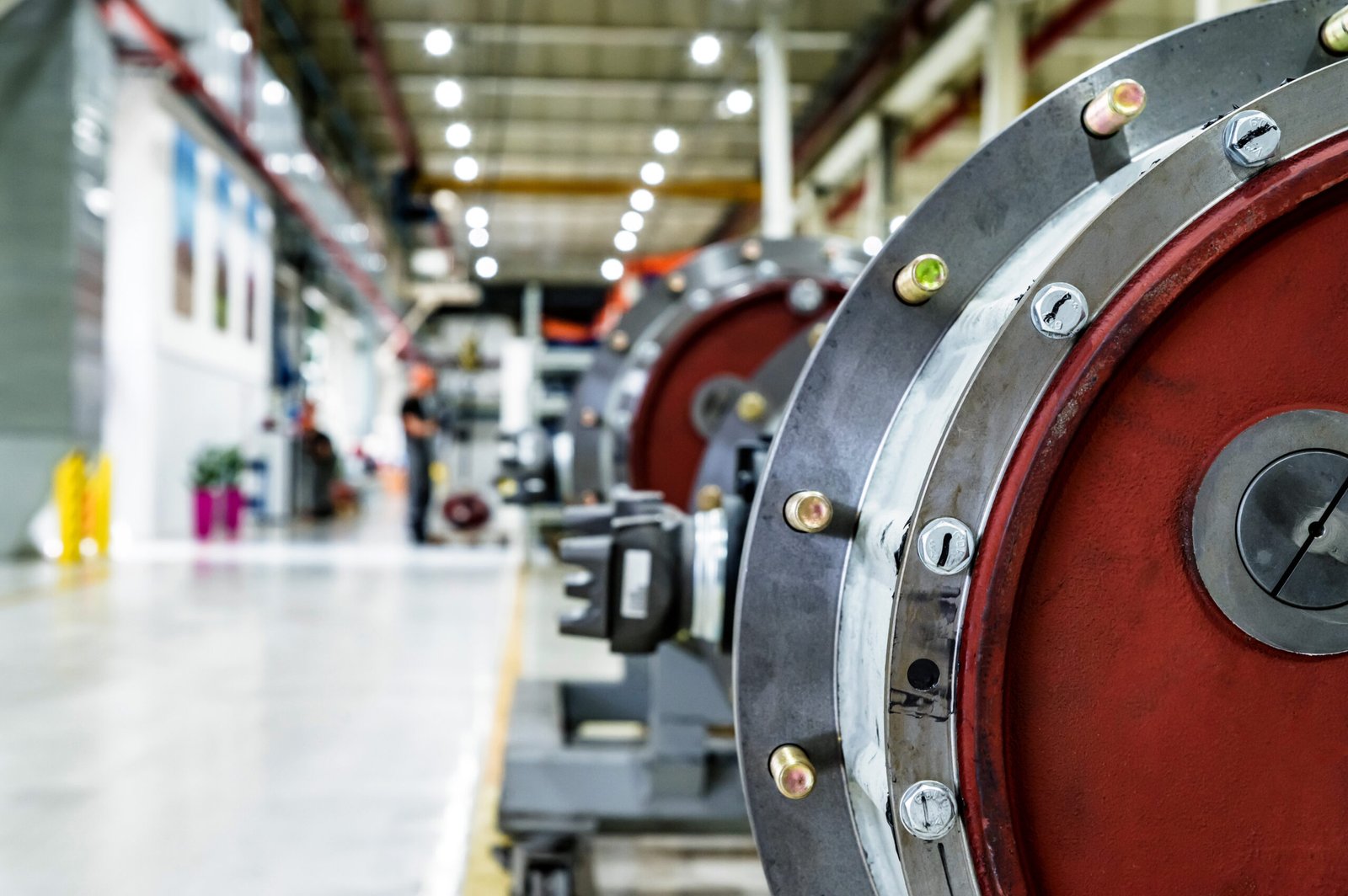
Importing a machine is not like importing a product. The unit value is high. The freight is complex. Installation requires coordination between the manufacturer, your facility, and often a third-party rigging team. Warranty and service terms vary by country. And if the machine arrives damaged, out of spec, or incompatible with your electrical infrastructure, the cost is not a return label. It is a halted production line.
Importivity manages the full lifecycle of machinery sourcing: manufacturer identification, technical specification review, quoting, factory inspection, export packing, freight coordination (FOB, CIF, or DDP), customs clearance, U.S. delivery, installation coordination, and warranty documentation. We source across China, Taiwan, Germany, Turkey, South Korea, and the U.S.
We do not just find you a machine. We make sure it arrives working, meets spec, and has a service path after delivery.
What Importivity Manages Beyond the Purchase Order
Technical Specification Review
We review your requirements against manufacturer specifications to confirm compatibility with your production environment, electrical systems, floor space, and output targets before you commit.
1
Factory Inspection and Testing
Our team coordinates pre-shipment inspections including machine run-off testing, dimensional verification, and documentation review at the manufacturer’s facility. Machines are verified running before they ship.
2
Export Packing and Freight Coordination
Heavy machinery requires specialized crating, bracing, and shipping. We coordinate export packing, container loading (or flat rack/breakbulk for oversized equipment), ocean freight, and inland delivery to your facility.
3
Incoterms Flexibility (FOB, CIF, DDP)
We structure each transaction under the incoterms that make sense for your situation. FOB for buyers who manage their own freight. CIF for door-to-port delivery. DDP for full landed cost with duties and delivery included.
4
U.S. Installation Coordination
We coordinate between the machinery manufacturer, rigging companies, electricians, and your facility team to ensure proper installation, power hookup, and commissioning. This is where most machinery imports fall apart without support.
5
Warranty and After-Sales Service
We document warranty terms, secure spare parts commitments, and establish service contacts before purchase. For Chinese and Taiwanese machinery, we help set up parts inventory and identify U.S.-based service technicians where available.
6
Where We Source Auto Parts
Four regions. Each selected for specific automotive manufacturing strengths.
China
Largest Selection, Lowest Cost, Fastest Build Times
China is the world’s largest machinery manufacturer. Injection molders, CNC machines, packaging lines, textile equipment, and food processing systems are available at 30 to 60% below comparable German or Japanese equipment. Build times are typically 60 to 120 days. Quality ranges widely, making factory inspection essential.
Strengths: Breadth of selection, competitive pricing, fast production
Considerations: Quality variance, service infrastructure outside China, Section 301 tariff exposure on some equipment categories
Germany
Premium Engineering for High-Performance Applications
German machinery sets the global standard for CNC machining centers, industrial automation, and specialized production equipment. Brands like DMG Mori, Trumpf, and KraussMaffei are benchmarks. Cost is highest, but for applications requiring extreme precision, reliability, and long machine life, German equipment pays for itself.
Strengths: Best-in-class engineering, global service networks, longest machine life
Considerations: Highest capital cost, longer lead times, 15% tariff under U.S.-EU deal
Turkey
Industrial Machinery at 20% Below Western Europe
Turkey is a growing machinery exporter reaching over 200 countries. Packaging equipment, food processing machinery, metalworking tools, and plastic processing systems are produced at quality levels approaching European standards at significantly lower cost.
Strengths: Competitive pricing, improving quality, shorter transit to Western markets than Asia
Considerations: Service network less established than German or Japanese OEMs
South Korea
Automation, Robotics, and EV Production Equipment
Korea produces advanced automation systems, robotic welding cells, semiconductor manufacturing equipment, and EV battery production lines. For high-tech production equipment, Korean manufacturers offer strong engineering and reliability.
Strengths: Advanced automation, strong engineering, good IP protection
Considerations: Higher cost, limited range for commodity-grade machinery
Frequently Asked Questions
If you need further assistance, feel free to reach out to our team!
What types of machinery can Importivity source?
Injection molding machines, CNC machine tools, industrial presses, packaging lines, food processing equipment, textile machinery, printing and converting equipment, and automation systems.
Which countries do you source machinery from?
China, Taiwan, Germany, Turkey, South Korea, and the United States. We match each equipment type to the origin that best fits your budget, quality needs, and tariff situation.
How do you handle freight for heavy machinery?
We coordinate specialized export packing, container or breakbulk shipping, customs clearance, and inland delivery to your facility. Oversized and overweight equipment is managed with flat racks, open-top containers, or project cargo carriers.
Do you coordinate U.S. installation?
Yes. We work with the manufacturer, rigging companies, and your facility team to coordinate delivery, placement, electrical hookup, and commissioning.
What about warranty and spare parts?
We document warranty terms and secure spare parts commitments before purchase. For imported machinery, we help establish a U.S.-based service path and identify critical spare parts to keep on hand.
What are the tariffs on imported machinery?
Rates vary by origin and HTS code. Chinese machinery may face Section 301 tariffs. EU machinery faces 15%. Taiwan and South Korea face 15%. We model your exact landed cost before you commit.
How long does it take to receive imported machinery?
Build times range from 60 to 180 days depending on equipment type and origin. Ocean freight adds 2 to 6 weeks. Total timelines from order to operational typically run 3 to 8 months.

Still have questions?
Our team is happy to help! Visit our Help Center or contact us directly.