
Product Economics
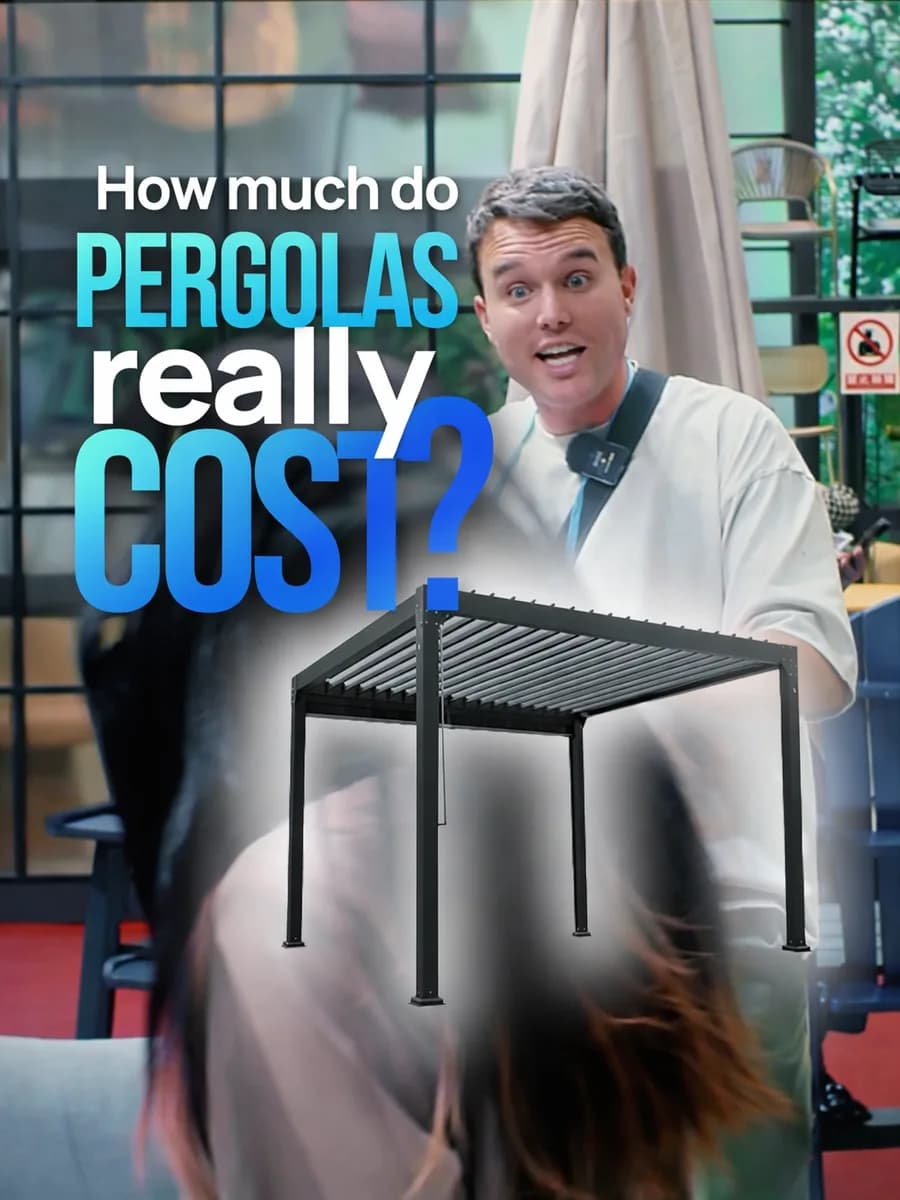
Three modular tiers, all MOQ 100 units: base only at $550 FOB / $660 landed retails $1,800-2,200 (63-70% margin); base + curtains at $850 FOB / $1,020 landed retails $2,800-3,200 (64-68%); complete package at $930 FOB / $1,116 landed retails $3,200-3,800 (65-71%).
A 40ft container holds 80-100 units at roughly $110-120 shipping per unit.
Market Size & Growth
Outdoor living spaces are the #1 home improvement category, with Americans spending $500B annually on outdoor living, and pergolas positioned second only to decks in popularity.
Peak season is March-July (60% of annual sales), with a Sun Belt shoulder season August-November (25%). Order by December for February arrival to capture the spring rush.
Target Customer Profile
Primary: homeowners ages 35-60, income $85K-200K, recent home buyers or renovators who value quality over the cheapest option.
Secondary: commercial buyers (restaurant owners, brewery/winery operators, contractors, developers). Tertiary: partnership channels (solar, roofing, landscaping, pool builders).
Why This Works
Commercial-grade aluminum is positioned at $3,200-3,800 versus $800-1,500 budget options and $8K+ high-end installs, with three-tier modular pricing ($1,800 / $2,800 / $3,500) capturing multiple budgets.
The partnership channel leverages existing solar/roofing sales relationships with zero CAC and 30% commissions, while high per-unit profit ($2,084-2,684) supports $400-700 CAC and partner commissions.
Risks
Seasonal demand risk (60% of sales March-July) is mitigated by ordering by December, focusing on Sun Belt states, and offering fall/winter promotions. Installation complexity is mitigated with video guides, optional professional install ($500-800 upcharge), and handyman network partnerships.
Partnership risk is mitigated through pilot partners, sales training, tiered commissions, and a parallel D2C channel. Shipping damage risk is mitigated with pre-opening photo requirements, 10-15% spare parts stock, and marine insurance.
The execution plan
- 1
Foundation (Months 1-3)
Order a 100-unit mixed container (40 complete, 40 base+curtains, 20 base), build a Shopify site with Affirm/PayPal Credit financing, create professional content, identify 10-15 partnership companies, and set up an installation network in 5-10 Sun Belt markets.
- 2
Launch & partnerships (Months 4-9)
Launch D2C with $5K-8K/month ad spend (Meta + Google), close 3-5 partnership agreements, train partner sales teams, and sell 40-50 units while documenting installations and collecting testimonials.
- 3
Scale both channels (Months 10-18)
Increase D2C ad spend to $12K-18K/month, expand the partnership network to 8-12 active companies, order a second container, add commercial B2B outreach, and sell 120-150 units.
- 4
Category leadership (Months 19-24)
Build 15-20 active partnership companies, run D2C profitably at scale, secure 5-10 commercial accounts, consider a Home Depot/Lowe's pitch with 200+ unit history, and sell 200-250 units for $1M+ revenue.